Read at your own risk: there are spoilers for many of these books ahead. These are brief, thoughts, often jotted down just after reading, not meant to be comprehensive.
Pride and Prejudice – Jane Austen

A thoughtful and endearing love story featuring an interesting cast of charming characters. The way that the relationship between Elizabeth and Mr. Darcy develops is definitely engaging, and it’s especially uncanny to see how many modern stories follow this exact same romance archetype. I have to say, though, I don’t feel too strongly about this book. It was pretty good but not coming close to my favorite novels of its era.
Pope Joan – Donna Woolfolk Cross

Incredible. Unique, entertaining, and scintillating. Pope Joan is an exciting and cathartic piece of historical fiction that had me shouting at the stupidity of the Catholic Church, particularly during this time period (the ninth century). In this book, Joan is surrounded by small-minded, sexist people who want to stop her from achieving her goals. All of these characters, mostly men, fail to use their brains, falling back on either spiritual or governmental authority. Their intellectual laziness and mental weakness is obviously more pronounced given the time period, but these characters are unfortunately very realistic in the context of the modern world. Anyone who says things along the lines of “X is wrong because the Bible/other spiritual text says it’s wrong” is effectively the same type of person as these foolish characters: afraid to engage with their minds, choosing to fully adopt a predetermined outlook. Anyway, aside from any social commentary, the story of Pope Joan is great. There were really no weak moments, and the story really starts to get interesting when Joan adopts her male alternate identity, as there’s constant tension about her ultimate fate. A really good and fun book that made me look at Catholic history much differently, and prompted me to wonder just how many “great men” from history were actually women in disguise. It certainly doesn’t seem that unlikely, to be honest.
The Goldfinch – Donna Tartt

The Goldfinch is a fantastic book that is maybe 100 or so pages too long. Donna Tartt is an incredibly talented and evocative writer, but I think that she actually over-writes a few parts of this book, leading to passages that are long-winded and not very interesting. I do see how some people would find these passages valuable or moving, though, and to be honest, it’s pretty much my only real criticism of the book. It is an entertaining, heartfelt adventure story about love, friendship, trauma, loneliness, and memory, and it makes me excited to see what else Tartt has written, as she certainly knows how to command attention and keep a reader invested, even after the 800-page mark.
A Court of Thorns and Roses – Sarah J. Maas

I don’t really know what I was expecting with this one. I guess I wasn’t expecting too much, though I made a point to go into this book with an open mind, as I had heard that it is emblematic of many of the most common YA fiction tropes and pulp fantasy conventions, but I also knew that it is incredibly popular and loved by millions of rabid fans. I kind of chalked up some criticism to the fact that this certainly a book targeted at a female demographic, and people love to hate on things that women enjoy.
As much as I wanted to be swept away by this story and be pleasantly surprised, I have to say that I didn’t like this book at all. As I understand it, the series gets a bit more complex and darkens with each entry, but I don’t think that can fix many of the problems that I have with the story that the first book sets up. I quite literally predicted the ending before I reached 100 pages, and that’s not because I’m smart or anything, but because I have read YA fiction before and I know the routes that these books take.
I don’t want to get too much into the weeds here, but suffice to say that ACOTAR suffers from many of the worst tendencies of cheap fantasy novels. It’s predictable, things like magic serve whatever purpose the author wants them to at any given moment, the villains are laughably cartoonish and flat, and the love interests are equally shallow, reminiscent of the models used for gas station romance book covers. Is ACOTAR a trainwreck? No, it’s not. I would even say that it has some interesting ideas, but I don’t feel that they led to anything valuable.
The Employees – Olga Ravn
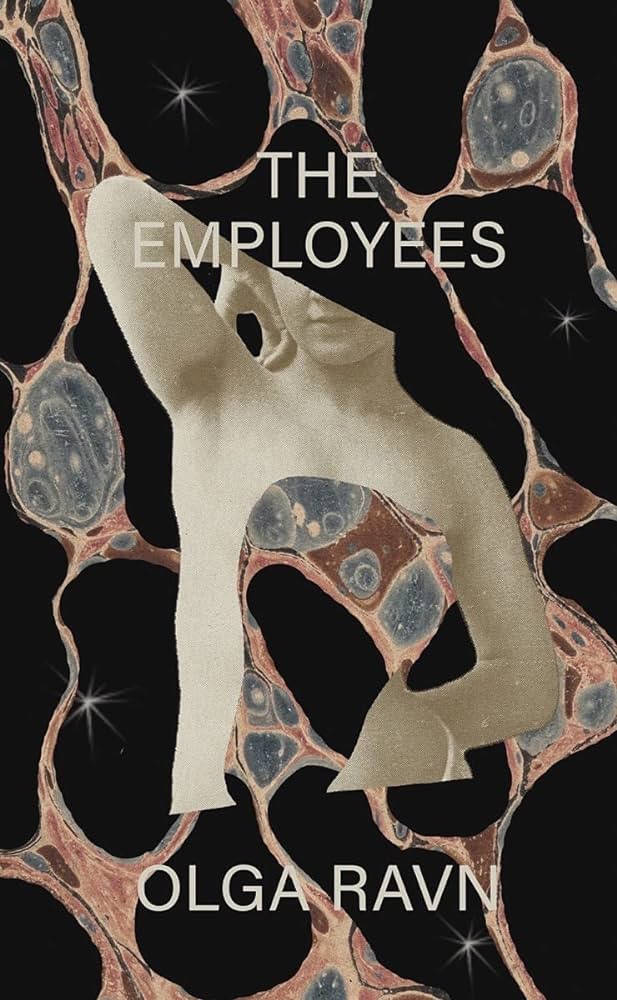
Very interesting but more like a thought experiment or bit of sci-fi prose than a full-fledged novel. The epistolary format has never been one of my favorites, especially in long form, but I feel it worked pretty well here, serving the pacing of the story and worldbuilding more than I would have expected.
The Bell Jar – Sylvia Plath

Best book I’ve read so far this year. Plath’s bell jar metaphor is one of the most eloquent descriptions of depression in literature, managing to be cold and clinical but also intimate, specific, and evocative. Esther’s story is incredibly bleak, not necessarily because a bunch of terrible stuff happens to her, but because her world is so totally devoid of joy and beauty. She doesn’t beat up on herself or spend too much time lamenting about how horrible the world is; she doesn’t have to. You can understand that that’s how she feels because of how she absorbs everything that happens around her. It’s subtle, but it’s a fantastic use of an unreliable narrator and greatly underscores the bell jar metaphor that is at the heart of the book. It’s a true shame that, even though she demonstrated such self-awareness and an understanding of her depression through this book, Plath would kill herself just a few weeks after, never able to finish her planned follow-up, showing what life is like when the bell jar lifts.
Bloodchild – Octavia Butler
Really great collection from Butler. She showcases a lot of great ideas here, like the benevolent aliens who employ humans or God coming down to make a tough proposition to a self-insert character, and the prose itself is as on point as ever. Her little afterwords for each story were nice, but I can’t say that they added too much to my appreciation of each story. They were a little to barebones for that.
The Dream of the Celt – Mario Vargas Llosa

An interesting and educational read, elevated tremendously by Llosa’s signature, unmistakable style. He’s an author that is uniquely capable of highlighting the more grotesque or shameful aspects of a person while making them just as beautiful and enthralling as their virtues. Much like Pope Joan, this book made me question the common historical narrative that so many of us have been taught: how many gay men, like Roger Casement, have been effectively erased from history, either literally or symbolically, through the erasure of their sexuality? It’s worth thinking about.
Leviathan Wakes – James S.A. Corey
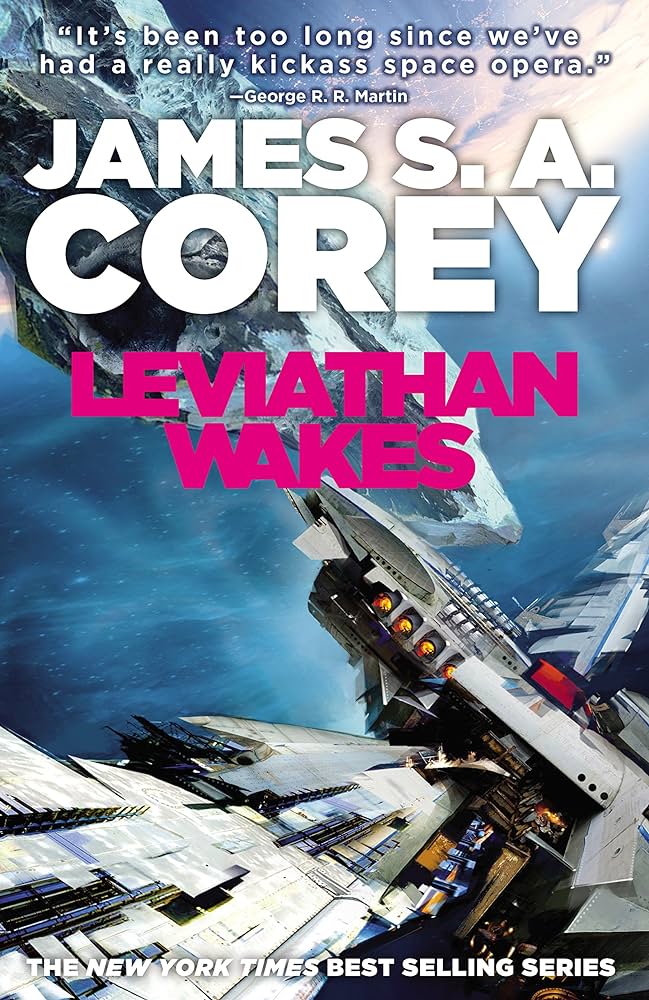
A good bit of fun, but maybe a bit too fun. I was expecting something a bit more along the lines of Star Trek, and what I got was much more Star Wars, in that Leviathan Wakes is a story very considered with its own larger-than-life, mythological premise. Holden and co. are all very cool, quirky, action-movie-esque characters, and while they are likable, they are a bit boring because of their vanilla virtue and adherence to certain tropes. Even Miller, who is positioned as the clear antihero/bad boy of the story, is so cliche that he becomes mostly predictable. Of course, this is all in good fun, as its a space-faring romp that’s all about heroes, villains, and intrigue, but still. It could have been more.
On a more specifically positive note, the biggest strength of this story has to be its worldbuilding. The relationship between the Earth, Mars, and Belt (OPA) governments feels very believable and interesting, as do the various cultural and social differences between these new, distinct civilizations. I kind of wish that the book was a bit more about these small details and less about the space battles and gunfights.
Berserk Deluxe Edition Vols. 1-5 – Kentaro Miura

Black Swordsman and Golden Age arcs:
Okay, gonna break these up into arc-based groups, as each individual volume isn’t enough to write it’s own description for, but the entire series is too much to consider one book. Also, Black Swordsman is super short so I’m grouping it with Golden Age.
Not a whole lot of new stuff, coming from the anime. In terms of plot, the Black Swordman arc is the most significant difference between manga and anime, but it’s not super substantial, honestly. It’s a nice way of establishing Guts as an asshole (and he’s really an asshole, probably one of the most unlikable protagonists ever), and setting up his rocky relationship with Puck, but that’s about it. Then, there’s his sexual assualt and other context of his childhood, which adds a lot more texture to him as a character but doesn’t change him in too many fundamental ways. All in all, the added detail helped me to better understand the complexity of Golden Age, although some of the monster-of-the-week stuff (Wyald) was a bit tiring, especially since I knew where the story was headed. Art was absolutely stunning and it’s honestly hard to believe that one man created this entire series. The new stuff will absolutely not be the same without him.
A Pale View of Hills – Kazuo Ishiguro

Like all of Ishiguro’s work, A Pale View of Hills is quietly devastating, hitting you with tidal waves of emotion when you least expect it. It certainly has a similar feel as What Remains of the Day, what with the protagonist recounting a specific part of her life during her middle-age, during a period of greater solitude. This book is, in some ways, a bit more interesting than What Remains of the Day, though, as Etsuko is less concerned with her career duties and more with her familial ones. There’s also a lot that this book leaves unexplained or “under-explained,” like how Etsuko went about leaving her husband and what exactly led to her daughter’s suicide. In this way, it’s also like What Remains of the Day, whose first-person narration makes everything so subjective and incomplete that it feels like you’re peering into the stream-of-consciouness of another person. I suppose that is exactly what you’re doing, when you read these books, and this humanity and intimacy is why I will probably always favor these over something like Clara or Never Let Me Go which, while great in their own ways, don’t have the same sort of unreliable interiority.
Lapvona – Otessa Moshfegh

I liked it. It’s better than My Year of Rest and Relaxation, in my opinion. The characters, prose, and story are more engaging and palpable. But I have to say that I’m not a huge fan of nihilism. I find it very dull when the “message” of a story is basically “people are bad, nothing matters.” This isn’t necessarily because I want to believe otherwise (though I do), but more so because it’s bland, uninventive, and boring. If nothing matters, why should I care about this story at all? What is Nihilist A saying that is different than what Nihilist B is saying? Also, Marek was a totally pathetic character. Maybe I’m a simpleton, but I would have liked him to be a bit more than a universally hated, physically incapable wretch with virtually no redeeming qualities.
Berserk Deluxe Edition Vols. 6 – 12
Conviction & Millenium Falcon Arcs:
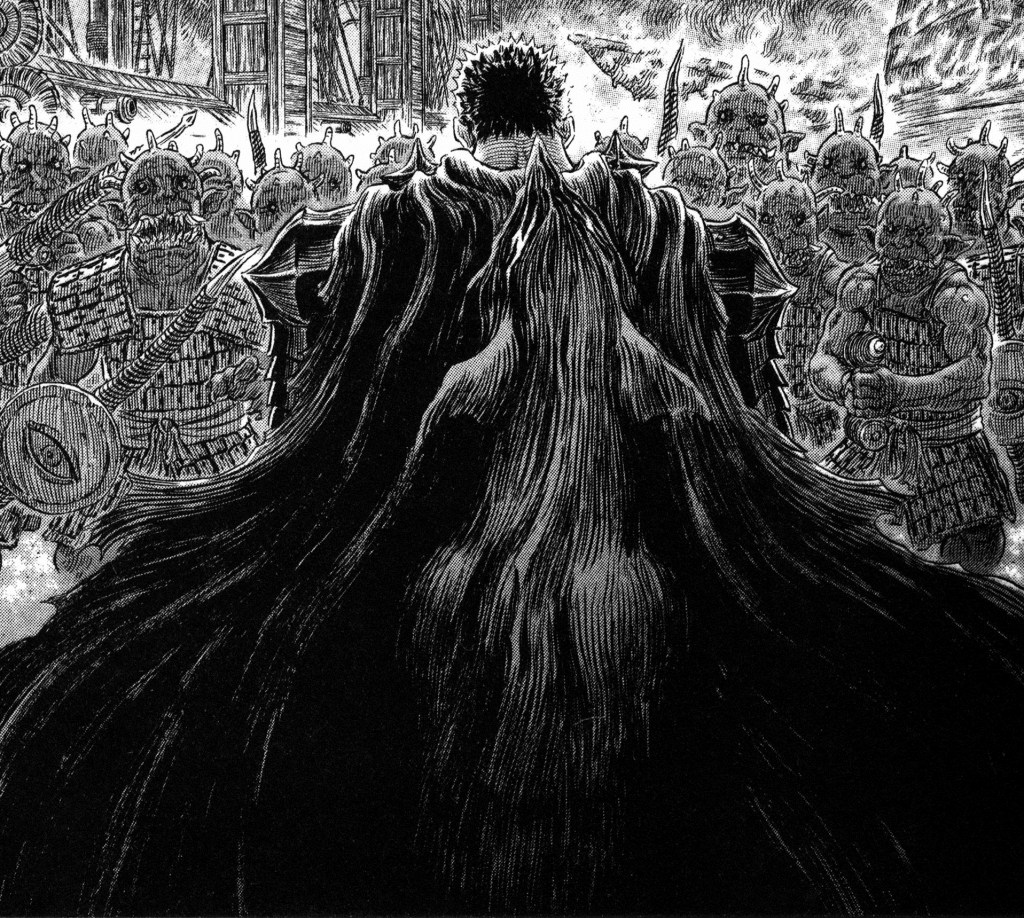
My favorite Berserk arc. Maybe tied with Golden Age. But my goodness, what a damn trip this was. The return of Griffith, the introduction of characters like Shierke, who is possibly my favorite Berserk character aside from Guts, and the transformation of other characters like Farnese, are more literary and engaging than any other work of manga I have ever read (which, admittedly, is not a long list). It is during this arc that Guts starts to find his new family, which made me very emotional at certain points. Honestly the story for this arc is so huge that I find it hard to really write my thoughts about it. It was amazing.
Caliban’s War – James S.A. Corey
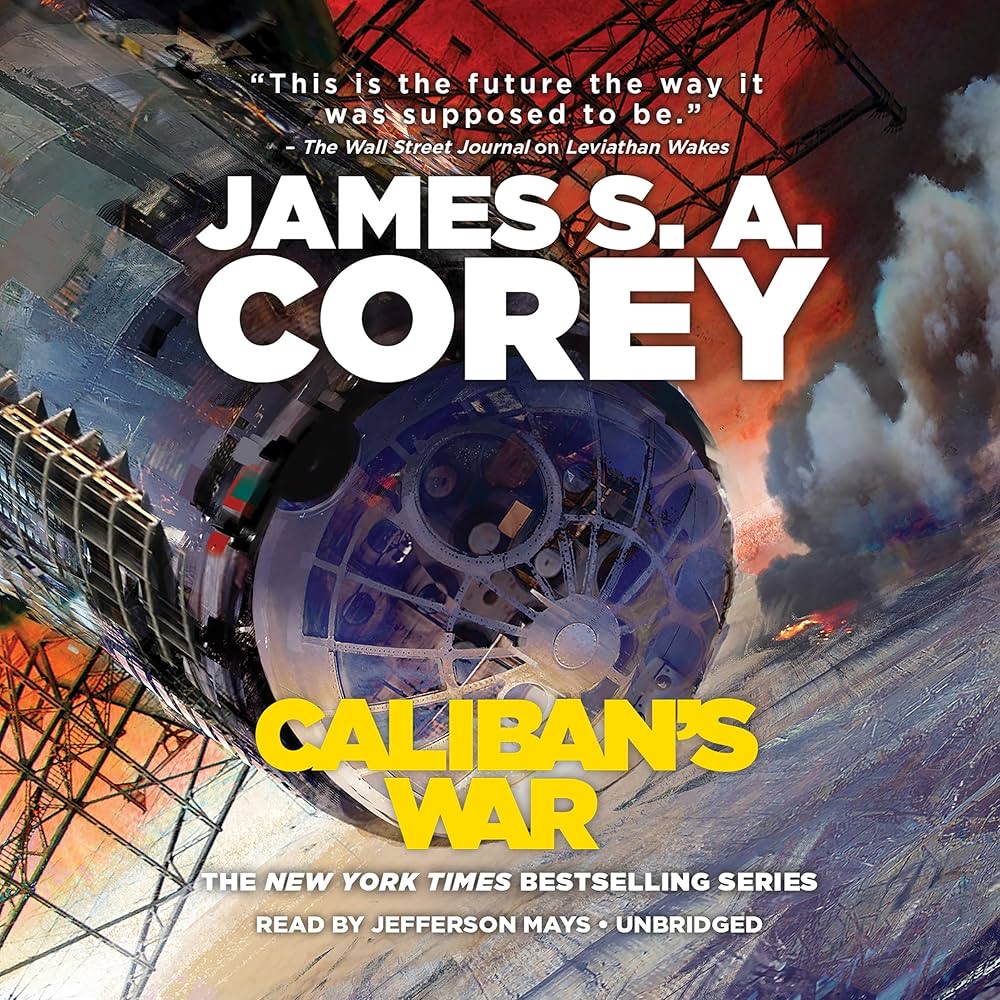
Much like the book that precedes it, Caliban’s War is a fun adventure story that is lacking in complexity, though it’s a bit more multifaceted than Leviathan’s Wake thanks to the expansion of the world of The Expanse (hm). Characters like Avasarala are more than welcome, showing a less shooty, more brainy side of the space opera equation, while still being appropriately fun and crunchy. I was rather disappointed with this book until I got near the end. This change of heart was not because the book became more of what I wanted it to be all along, but because I made peace with the fact that it was not what I was looking for. Once I allowed myself to be carried away by the blockbuster-movie-style romp, I found myself appreciating the story so much more. I realized that I am truly invested in these characters, that I like them, and I like the world that they inhabit. It doesn’t need to be more than that, even if it being “more than that” keeps it from being considered among my favorites.
Berserk Deluxe Edition Vols. 13 & 14
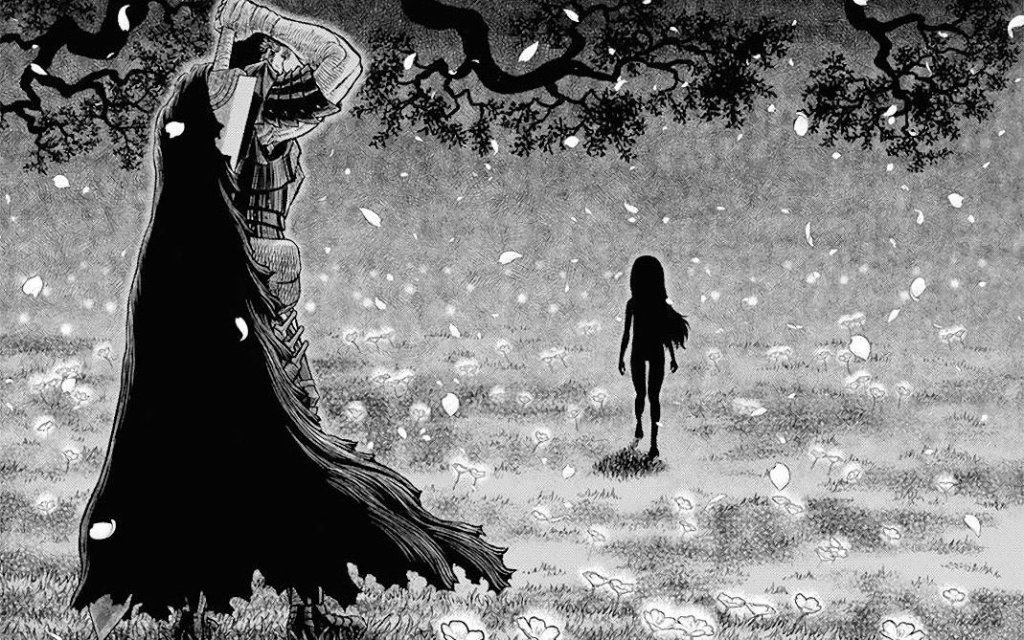
Fantasia Arc:
So, I have to admit, I am writing these little reviews long after finishing the manga. Trying to jot down a few thoughts about dozens of manga volumes, written over decades, is a lot harder than I thought it would be. Berserk is just a little too big for me to write about like I would a normal novel, even a lengthy one. But I will simply say this: aside from the overly-long boat stuff, Berserk is one of the greatest stories I have ever experienced. Never has something lived up to the hype the way that Berserk has for me. What can I even say about it that hasn’t been said? Guts is one of modern fiction’s greatest characters, a deceptively simple man who rages against fate and boasts an almost superhuman ability to perservere. Sounds a bit cliche, doesn’t it? But he isn’t like other characters because he isn’t a hero. He isn’t trying to save the world–at no point is that his goal. He is driven by rage, grief, and trauma, even as he heals a bit and makes friends and becomes less of a psychopath… he is a killing machine, striving toward Griffith without mercy because that is who he needs to be, in order to survive in this world. Every waking moment is a struggle for him, more than what anyone in the real world can relate to, and at no point does he actually, permanently triumph over these struggles. He is merely “the Struggler.”
But as much as he is driven by his hatred and anger, he is also compelled by love. His love for Casca, and I think on some level, Puck, Isidro, and Shierke (along with Farnese and Serpico, although to a lesser extent), keeps him going. This is why he is so shattered by Casca’s kidnapping by Griffith at the end of this arc. The story is not yet over, and I truly hope that its ending can honor Miura’s legacy and vision. But even if Berserk were to end right now, it would still be one of the greatest stories ever told. It’s pretty darn good.
Ernest Hemingway – The Green Hills of Africa
Forgot to write my thoughts about this one. It was good. It was extremely “Hemingway,” not only because it is a memoir rather than a novel, but because it focuses solely on Hemingway’s most well-trodden subjects and obsessions: masculine competition, moments of peace, conquering one’s goals, overcoming nature, et cetera. Hemingway apparently sought to prove that a memoir could be just as exciting as a novel with this book. I’m not 100% sure if this is the most convincing example of that. Oddly enough, I think a better example of this comes from Hemingway’s own bibliography: A Moveable Feast is a far more engaging, nuanced, and vulnerable memoir, that I feel is far more unique within Hemingway’s body of work.
Anthem – Ayn Rand

The best introduction to Rand’s work, because it’s not a million pages long. It did its job: I want to read Atlas Shrugged and The Fountainhead now. I am also a bit more sympathetic to Rand’s philosophy, which I had only ever heard parroted or through the lens of critique in the past, though I still disagree with some of her conclusions. For one thing, her vision of Objectivism is unnecessarily harsh: it recognizes how prioritizing the “weakest links” of society would result in mankind being bogged down, as her straw-man rendition of a Collectivist society outright denies any semblance of superiority, but Objectivism has no consideration for those who are perhaps incapable of carving out their own destiny in the heroic manner of her hero. What of the old, the disabled? Her philosophy also has an essentialist quality to it, putting far too much weight into the idea of natural giftedness and talent. In reality, there’s plenty of evidence to suggest that one’s circumstances plays a significant, perhaps even deterministic, role in their capabilities. This is Rand’s most fundamentally conservative idea: it implicitly rejects the notion that factors like education, wealth, and access to resources play a role in how competent or “valuable” someone is in society. Anthem’s hero ultimately transcends the confines of his Collectivist society because there is no real power structure to keep him from living his life as he sees fit. This is not so in the real world, where things like debt, work shortages, poor wages, and the availability of certain economic or even basic life resources hinders many people attempting to achieve the utopic dream of Anthem’s ending. Anthem doesn’t address these issues, and I hope that they are touched on in her other works.
Glamorama – Bret Easton Ellis

One of the funniest books I’ve ever read, and one of Bret Easton Ellis’s strangest projects, which is quite a statement. Glamorama is sexy, sleek, biting, and mean, but it’s also one of BEE’s more serious and sympathetic works, right up there with Lunar Park. Victor Ward shocked me by becoming perhaps BEE’s most likable lead (in my experience–I still haven’t read Less Than Zero). Considering his portrayal in Rules of Attraction, that’s something that I didn’t expect at all.
One of the book’s biggest weaknesses is also one of its biggest strengths: I don’t really know what it was about. How much of the story was in Victor’s head? What was the deal with the film crew? For much of the story, I assumed that the crew was a manifestation of Victor’s psyche, resulting from his disassociation from stress. But then it seemed like the crew directly impacted the story. Like how the director shows Victor the footage of Palakin with Bobby. It’s possible that this was also in Victor’s imagination, maybe he just put two and two together and this is his mind’s way of revealing it to him, but it’s definitely unclear. And then there’s the matter of the doubles and the ending, which jumps all over the place and left me with a stronger sense of confusion than I was expecting.
The Color Purple – Alice Walker
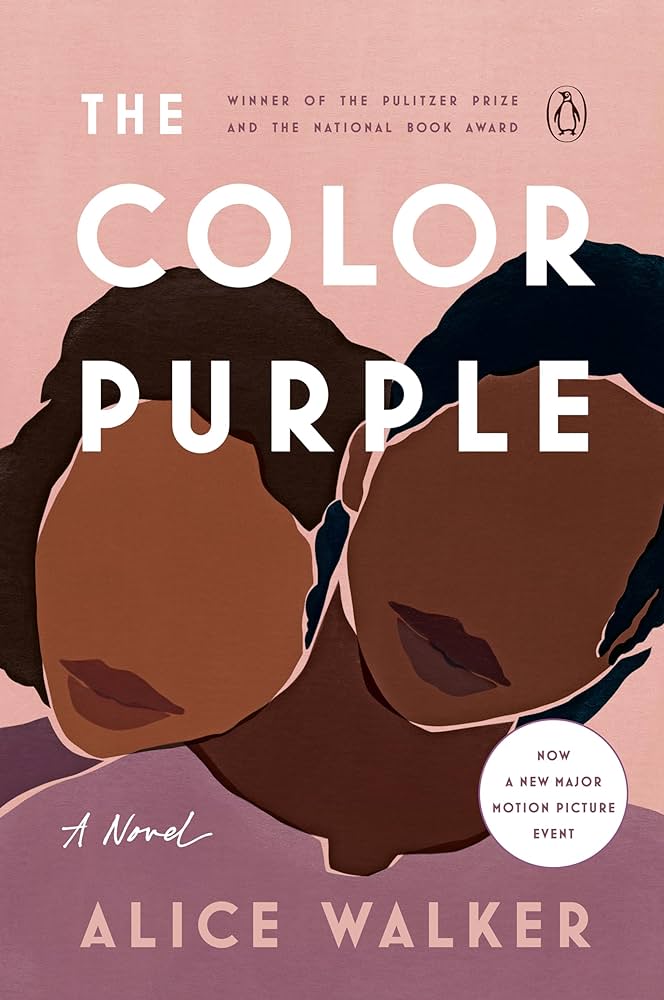
Incredibly good and not really what I was expecting. I saw neither major film adaptation, nor did I ever hear anything approaching a plot synopsis, but I was anticipating something a bit more restrained and quiet. This book has nuance, to be sure–loads of it, actually–but it’s also extremely entertaining and titilating. It’s about love, sex, identity, and family, and its tight length coupled with its scope, which spans several decades, makes it go by at a clip. Despite this, I will say that it drags a bit during a few of Nettie’s letters. But I may just feel this way because those chapters were such a dramatic shift, plot-wise, from Celie’s story, which I was extremely invested in and wanted to stick with!
A Case of Conscience
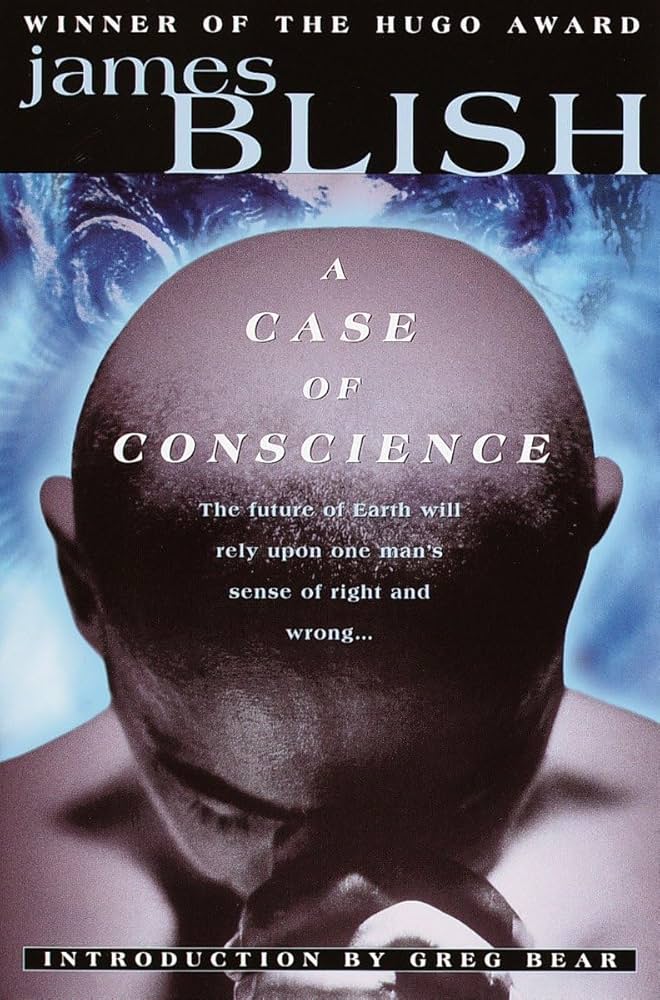
I’m writing this immediately after putting the book down, and I have to say it has left me feeling quite haunted. Some specifics of the story can be difficult to parse, but the key narrative–that of Ramon struggling with both his faith and his duty as a human being, newly contextualized by the emergent Lithian species–is extremely lucid and gripping. The title of the book was something that I at first believed was in reference to the Lithian species: it’s about whether or not they have a conscience, right? That’s what Ramon expresses at the start of his journey, that it is his job to determine whether this new species can tell right from wrong, natural from unnatural. In a sense, this issue is resolved early on, but also not at all. The true case of conscience refers to Ramon’s own. Though he finds clarity through his faith, he is not left without guilt, uncertainty, and fear about the divine purpose he has been sent to see carried out. A brilliant novel that I will not forget any time soon.
We Who Are About To… – Joanna Russ

Like Lapvona, this is a bitterly nihilistic novel, but I enjoyed it much more than Lapvona. This may come down to the unique setting, the way the story is delivered, or Russ’s exceptional and arresting prose, which keeps the story fresh and brilliant in spite of its straightforwardly bleak premise; it’s easy to make nihilism feel pretentious and boring, but Russ avoids this expertly. It’s a bit of an anti-sci-fi story, which was also very refreshing and interesting, as the book critiques the manifest destiny themes of so many of its golden age contemporaries.
Blood Music – Greg Bear
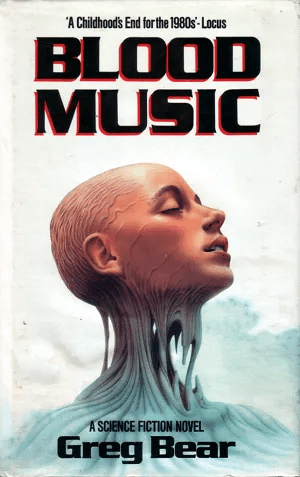
A very interesting and compelling read that took turns I wasn’t expecting. The shift from somewhat stiff, but still intriguing, biological mishap to gripping existentialist exploration was surprising but very natural at the same time. I have to say, it was a little hard to be invested emotionally once the book started jumping between characters, about halfway through the story, but the concept kept me engaged the whole way through. More on the “jumping around” point, the Suzy sub-plot dragged a bit at points, but I do think it’s very important to the overall narrative, so I can’t really say it was poorly done or anything. Just not something that I connected with very strongly. I was much more invested in the grand scheme of the noocytes, as explored in Bernard’s storyline.
Solaris – Stanislaw Lem
Interesting and enjoyable but also slightly disappointing. For many, this is the “ultimate sci-fi classic,” defined by the genre’s poignant existential commentary and robust, ingenious concepts. It lives up to this sterling reputation at certain points, like with the incomprehensible spirits of Solaris and the psychological deterioration of the characters, especially Kelvin, whose slow descent is perhaps the most interesting part of the book. But at other times, it can be quite dense, delving far into minute details that didn’t seem very important to me. But I also may not have been in a place to receive that information. It’s thought-provoking, but not mind-bending, and I think I was hoping for more of the latter.
Three Lives – Gertrude Stein

Excruciatingly dull. My goodness, I am so disappointed by Gertrude Stein, who is renowned for her literary talents, which inspired the likes of Ernest Hemingway. These three loosely connected stories are painful to read at points, with so little of note occurring that I can already feel them slipping from my memory. I am more than okay with books about the little things–in fact, I often prefer these sorts of books–but there is nothing to latch onto here at all. All the protagonists were boring, with the exception of Melanthca, who is interesting for the worst reasons: Melanthca, the story, is absurdly, almost comically, racist. There’s so much about “white blood” and “black blood” and how the characters with white blood are better than those with black blood… it was cringe, to say the least. And I have to wonder, why did Stein write this story? What made her think that she had the perspective for this sort of setting, covering these characters, who are completely unrelatable because Stein seemed to have have an extremely negative view of their kind? Also, I found Stein’s repetitive prose trite and grating, not rhythmic or affecting. I’ll read Tender Buttons since it’s so short, but I don’t think Stein is for me.
Roadside Picnic – Boris & Arkady Strugatsky

Quite amazing, though it’s hard for me to pin down exactly why. At the most basic level, I loved the characters and world of the book: each person in the story, from Red to Vulture, felt remarkably well-realized, and the Strugatskys manage to be remarkably efficient in establishing them. The entire book feels very thrifty, giving a believable glimpse into a complex world in only a few hundred pages, any omitted or under-explained details serving to give the reader a sense of plausibility, like there’s a lot going on behind the scenes that we just haven’t seen because it’s not immediately relevant or known by the principal characters of the story. In that same vein, there are certain things that I only half-understand, such as the ending, and I’m hoping to gain more insight on a subsequent read, sometime in the future. Roadside Picnic is more than deserving of the praise that it receives. It joins the ranks of only a few other books that have carved out a long-term space in my brain.
Shuggie Bain – Douglas Stewart
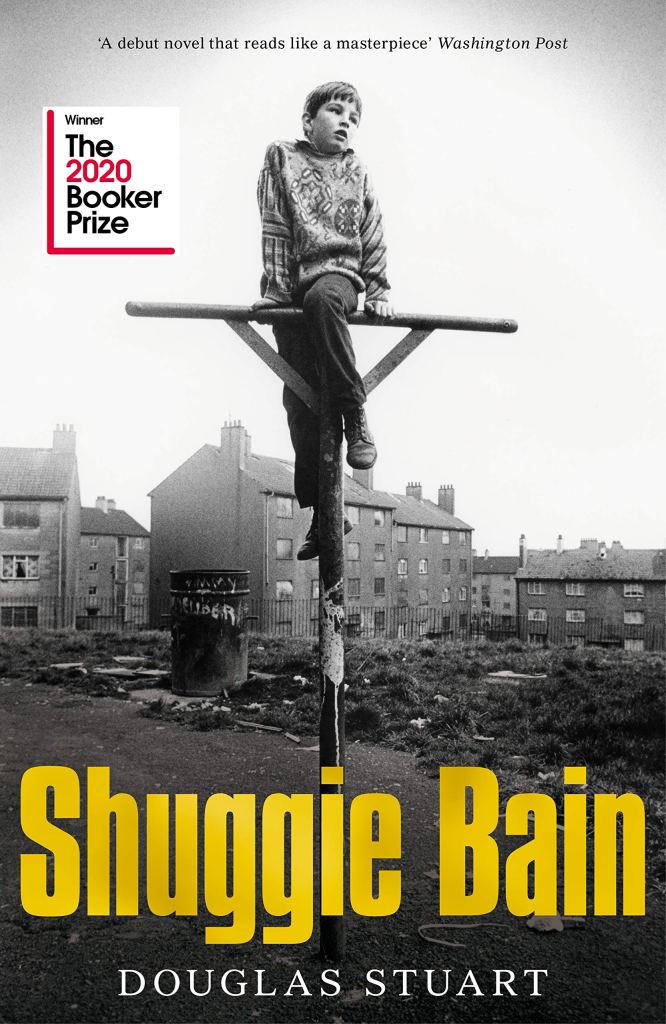
Very good and readable. I read this decently long book in just a few sittings because I was so swept along by the story and smooth prose, and I didn’t really want to leave its world. It’s called Shuggie Bain, but it’s really more a story about his mother Agnes, who I felt was an appropriate portrait of alcoholism. Shuggie himself was a bit…strange. I feel like he should have been in a different book. His quirky, too-old-for-his-age antics felt out of place. Other than that, it was a mostly good read.
The Diary of a Young Girl – Anne Frank

Quite a haunting and surreal read. The tragedy of the holocaust casts a pall over this work, naturally, as it’s impossible to engage with it without understanding its cultural and historical context. Indeed, virtually anyone reading this book in the modern age has likely heard of it long before picking it up, and as such, it’s a book whose reputation precedes it. That said, it is just as shockingly detailed and masterfully written as it is purported to be, with Frank demonstrating an uncanny talent and intellect for someone so young. Her insights are not just powerful because of her circumstances, but because she appears to have been a remarkably gifted and astute young woman, which makes reading her diary doubly tragic: she perhaps could have gone on to be a great thinker, had she survived the injustices of WW2. In this sense, the book is emblematic of the atrocity of the holocaust, a solemn reminder of the life that was stolen, of all that was robbed from the world.
Let the Right One In – John Ajvide Lindqvis

A page-turner for sure. Like the film it spawned, this book does a great job of being creepy and uncomfortable–two traits that I rarely associate with vampires, creatures that have been parodied and mutated for use in romance and drama stories that they have lost all their horror, at least for me. This story really makes vampirism seem like an awful thing: there is no sexiness about it at all. In fact, the curse of vampirism seems to destroy and pervert everything around it, tearing through communities and preying on vulnerability and sadness. It was interesting how Eli seems to strike those who are depressed, lost, or isolated in some way, which could make this story seem rather cruel at points, but in a good way.
As far as how it differs from the film, it’s actually far more disturbing in many ways, with plot elements like Hakan’s pedophilia adding a layer of hideousness to an already gross narrative. It’s not a life-changing read, but it’s definitely an entertaining one.
An Artist of the Floating World – Kazuo Ishiguro

I’m not sure Ishiguro is capable of producing a lackluster novel. This book sits alongside his more grounded works like What Remains of the Day and A Pale View of Hills, imbued with the same sense of melancholy and thoughtfulness that defines those books. It grants a valuable insight into Japanese culture, though I can’t speak to how accurate the hatred of Ono is to reality. However, it’s easy to accept it within the context of the narrative, so knowledge of the historical backdrop is not necessary to enjoy the book, though I’m sure it would have deepened by understanding of it. Indeed, I did not exactly understand what was going on until the novel’s final act, when the conflict between the protagonist and the rest of the characters becomes far more explicit and pronounced. Like Ishiguro’s other books, there is a calm sentimentality to this story, a feeling that, although damage has been done, the characters can be at peace with what has happened. I would rank it among my favorites from him.
At Paradise Gate – Jane Smiley

A thoughtful and non-sentimental exploration of family life. Smiley delves into feelings of resentment, loneliness, and hatred, all of which appear to be part and parcel of that thing known as love. Through this, she also poses questions about the future, and how one is meant to react when faced with the realities of childbirth and life with one person, forever. It is never easy to predict, and I appreciate that.
A Fire Upon the Deep – Vernor Vinge
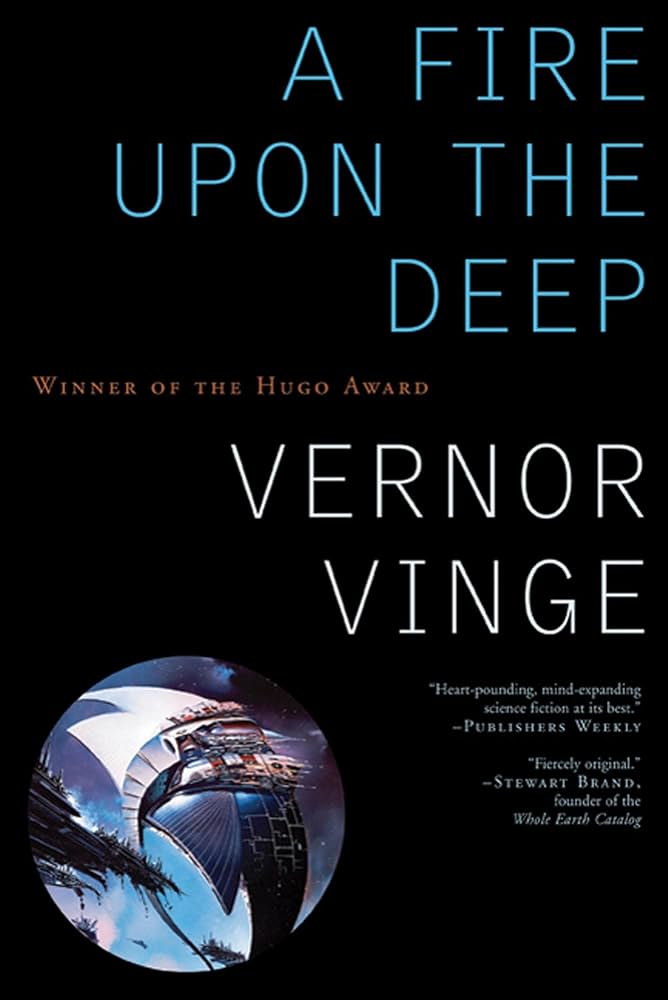
The best sci-fi I’ve read in quite some time. This book fulfills the hunger I’ve had for grand-scale speculative fiction built around complex, impossible-seeming ideas. If I could compare it to The Three Body Problem, I would say that it is perhaps not as consistently engaging as those books, but it is certainly more creative and mind-bending, at least in some ways. I particularly enjoyed the Tines, as it was clear that Vinge went to great lengths to envision what this fundamentally inhuman society would look like. It’s rare to find stories that treat their alien races as having history and social structures that are as complex as humanity, and Vinge goes the extra mile with the Tines, carefully considering how their unique biology impacts their psychology, government, et cetera. Worth noting is that the version of the book I read has a lot of typos.
Lancelot – Walker Percy

Psychosexual drama meets Southern Gothic in this tale of lust and betrayal. Percy’s protagonist is constantly engaging and charismatic, though not in the ways that one would expect. His manic moods and almost psychotic style of conceptualizing his own life is terrifying, but also compelling. I am definitely newly enamored with Walker Percy.
The Poppy War – R.F. Kuang
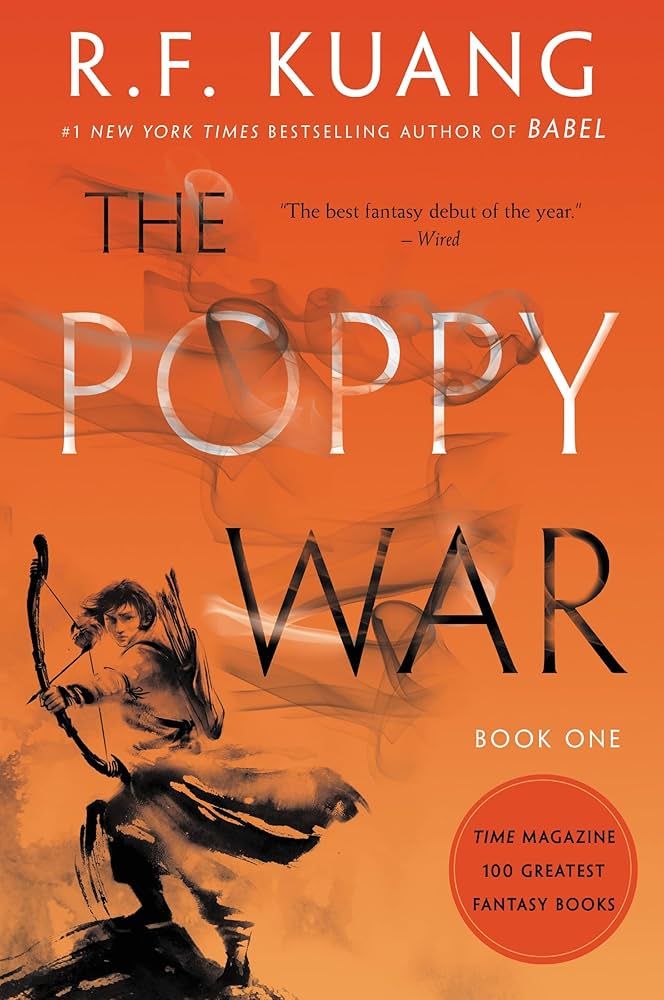
Eh… not my style. Very young adult, which is perhaps my least favorite literary subgenre. Dialog is very rough, with that insufferable “movie-like” quality that I cannot stand. Dialog, and prose in general, can be musical, and it’s disappointing how so many authors just view their writing as a means to an end, a necessary vehicle used to tell their stories rather than a medium for artistic expression. I feel that Kuang had a fairly interesting story in mind, but lacked the ability or inclination to present it artfully.
The Covenant of Water – Abraham Vergesse
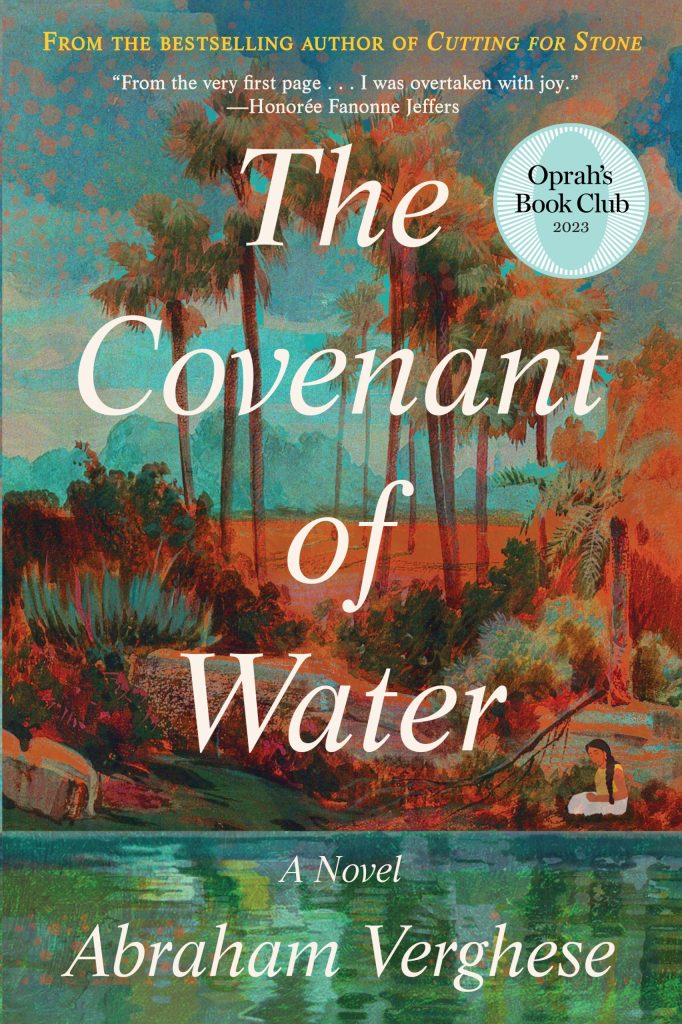
A lovely and extremely long family drama that scratched my persistent itch for something like East of Eden. Vergesese’ prose is immaculate, making me somewhat embarrassed: he’s a doctor and an artist both—quite a well of talent, in fields that many often think of as being opposite one another. I am writing this long after finishing the book, so I’m struggling to land on specifics to praise or criticize, but you’ll have to take my word for it.
The Push – Audrey Audrain
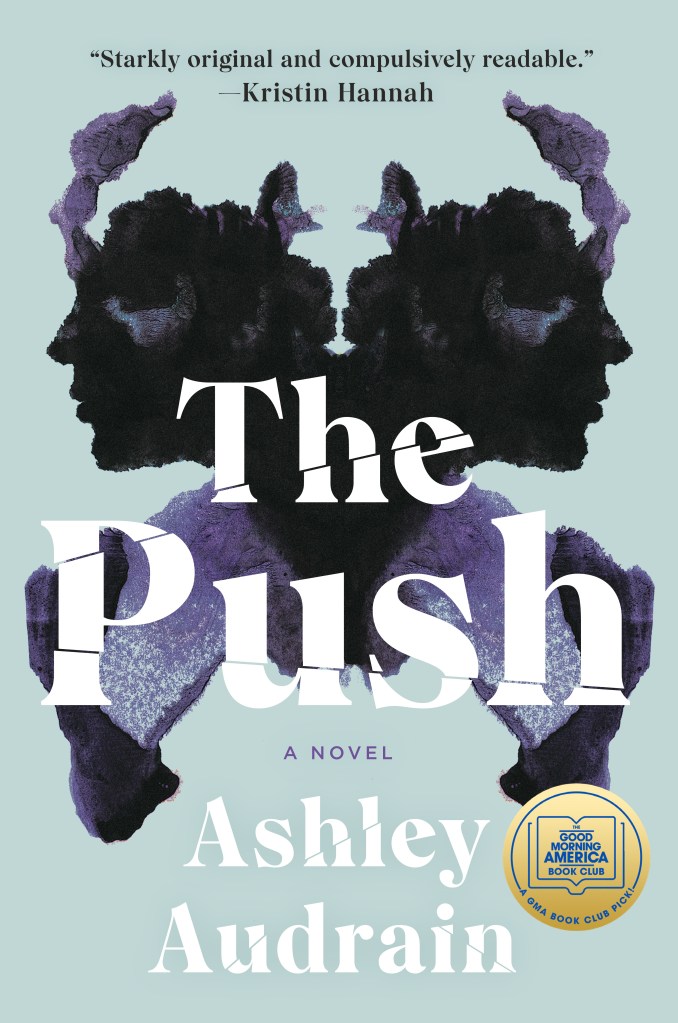
Pretty great for the most part but with a very disappointing ending. It felt like all the ambiguity, which was an essential draw of the story, was ripped away in the last few pages. It was like Audrain didn’t trust me to analyze the story for myself, or like she worried about it being too nebulous just before publishing, and had to scribble something out to compensate.
The Songs of Distant Earth – Arthur C. Clarke

It’s funny, I remember liking this book a lot, but now that I sit down to write about it, I find that I don’t remember much about it. That doesn’t exactly scream “great book.” But I also can’t say I didn’t enjoy it. Pretty middle of the road sci-fi story, elevated by Clarke’s fantastic prose and unique outlook.
So Long, See You Tomrrow – William Keepers Maxwell Jr.
I wanted to like this book a lot more than I did. I never really felt like I had a firm grasp on any of the characters’ personalities, as they were all rather stilted. The fact that so much of the story is narrated from the perspective of a character who doesn’t actually play much of a role in its events contributes to this sense of distance. I wasn’t grabbed by it at all, and ultimately found it dull.
Love, Again – Doris Lessing
Now this is a good damn book. Very funny, cutting, and unexpected at many times throughout, with a strange and almost humorous tone that kept its themes from being too overwhelmingly sappy or sentimental. And it’s remarkably unsentimental in general, considering its subject matter, which makes it all the more attractive and affecting for me, as I’m able to better empathize with Sarah without her trying to scream her overt feelings in my face. A really special book that has me excited to explore more of Lessing’s work.
Dark Matter – Black Crouch
Just an eyeroll-inducing read for the most part. Very embarassing prose at many points, and the protagonist is a total dork who never seemed like a real person. He seemed like the image of a cool person within a nerdy person’s head (witty, vaguely but significantly intelligent, married to a “beautiful Spanish woman” who has no personality but to prop him up and demonstrate her love for him. Really, what was that scene where he meest the first Daniela alternate and she immediately sleeps with him despite him being obviously insane?). The Chicago stuff also felt very strange and forced, not to mention inaccurate (you can’t see Lake Michigan from Pulaski, if I recall correctly). Also, stop calling it your brownstone every time you talk about your house. Just call it your house.
The Sluts – Dennis Cooper
Lovely in a near-vomit-inducing way. Cooper manages to make sex sound like the most horrific thing in the world, which is exciting in an of itself, even though I hate to admit that. Uncertainty is the name of the game in The Sluts, which can be something of a double-edged sword: it keeps you on your toes, but it also makes things less impactful at times, since you’re never sure if that disgusting thing you just read actually happened or not. I really appreciated how Cooper gave different characters (users?) subtly different voices. Nice detail. Extremely fun to read.
My Ishmael – Daniel Quinn
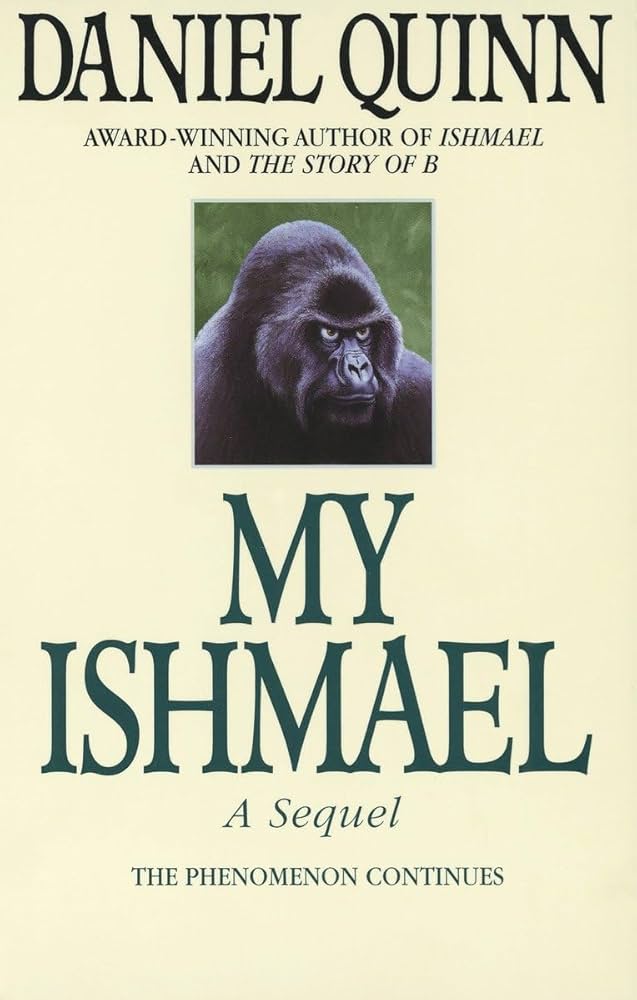
Nothing will ever be as surprising and special as the first Ishmael, but that’s to be expected. My Ishmael covers many of the same subjects as Ishmael, but it assumes some knowledge on the part of the reader (less time explaining concepts like Takers vs. Leavers, for instance), which leads me to believe that readers of the first book are the intended audience. This is all the more apparent in the cameo appearance of the first book’s narrator, which fits nicely into the book’s unexpected theme of subjectivity. “Locking up the food” will be the greatest takeaway from this book, for me; it’s a very elegant way to explain the root of, essentially, all our problems.

 Nick Rodriguez