Books I Read in 2022
A Dance with Dragons – George R.R. Martin
Possibly my favorite in the series so far. Dance moves at a much quicker pace than previous entries, and the greater focus on magical aspects of the world adds a lot to the story. Jon’s chapters were the best by far. Martin’s approach to fantasy world-building is much more than just “gritty.” He puts characters first, and makes readers care about what they go through, which is a failure of many other fantasy books I’ve read; other fantasy books put the world and lore first, and the characters are more of an afterthought. This is a bittersweet book, however, because at the time I’m writing this, it’s the last ASOIAF book that has been published. It’s been twelve years.
A Little Life – Hanya Yanahigara

A devastating novel in many ways. I was particularly moved by Jude’s final attempt to heal himself before his ultimate suicide. Some negatives: dialog was genuinely terrible at parts– stilted, awkward, melodramatic; The book was too bloated and probably could have been cut down by 150-200 pages.
Lunar Park – Bret Easton Ellis
Once again BEE has come up with an extremely strange story. Lunar Park has his recognizable delirious, manic, complex prose, but is surprisingly more sentimental, earnest, and mature than his other works. I also found that many of the moves he has made in stories like American Psycho (e.g. the shift into 2nd-person perspective and the implementation of various hyper-long run-on sentences) were much smoother and pulled off a lot better here. The premise was also decidedly un-Ellis-like and seemed more like something Stephen King might write. It was super meta and makes me want to revisit it after checking out Less Than Zero and Glamorama.
Men Without Women – Haruki Murakami

Phenomenal. Definitely one of the best and most cohesive short story collections I’ve read. I would find myself laughing one moment and then be immediately struck by some stealthy and poignant insight that came out of nowhere. I think that An Independent Organ is tied with Kino for my favorite out of the bunch. Men Without Women is probably the one that will stick with me the most however, as it is kind of singular in its tone and idiosyncrasies. A good intro to Murakami’s massive body of work.
Homer & Langley – E.L. Doctorrow

Homer & Langley shocked me with just how abruptly it turned to a darker story about these men who were, in some ways, pitiful– though I was just as surprised at how this abruptness didn’t bother me. Even though this novel is several hundred pages shorter than A Little Life, I feel that it is much better at conveying the vastness, complexity, and sprawling nature of life. This could have to do with how specific the two titular characters were, and how much more focused this book is compared to A Little Life. A great read. Didn’t even know it was based on a true story until after I finished it.
1Q84 – Haruki Murakami

Long-ass book. Still, it reminded me why I enjoy lengthy reads; I felt that I had really experienced something special and momentous with these characters. Tamaru is a badass. I feel bad for Ushikawa.
The Song of Achilles – Madeline Miller
A great modern retelling of the legacy of an iconic Greek hero. Miller’s ability to inform and compel while finding a balance between contemporary and archaic language was very impressive, and the tragedy of the tale was well felt.
Travels with Charley In Search of America – John Steinbeck

A book that flowed much more quickly and smoothly than I had first anticipated, for whatever reason. There were many times that I felt it lacked a crucial insight into the struggles and realities of black Americans, which I mostly attributed to the book’s unfortunate status as one written by an older, white author– a drawback characteristic of so many American classics. However, I was proven wrong in this assessment, as the fourth and final segment of the book was focused almost entirely on the reality of racism in this country, in a way that surprised me quite a bit. Although this portion was shorter than the rest of the book, its position and the seriousness with which it was written make it perhaps the most important part of the experience.
For Whom the Bell Tolls – Ernest Hemingway

Ernest Hemingway certainly knows how to end a book. I would be interested to look more into why exactly this book was panned at the time of its release. It was certainly very different from other Hemingway novels and shorts that I have read. It was much more colorful and used more figurative language, for one, but it also felt a bit more sentimental. I couldn’t help but compare Robert Jordan & Maria’s relationship to the relationship presented in A Farewell to Arms. In For Whom the Bell Tolls, this relationship was considerably more tender and less cynical, even though it ended in death as well.
Elantris – Brandon Sanderson
Very mixed on this. On the one hand, the worldbuilding and premise were pretty interesting and the magic system, especially once expanded upon in the final 100 pages or so, was fascinating, definitely the highlight of the book. On the other hand, the writing kind of sucked. It felt very juvenile and Stephanie Meyer-ey at times, with characters acting in a way that a shy or nerdy person would think a “cool” person would act. Dialog was bad most of the time too. I read comparisons between Sanderson and George R.R. Martin online, but that comparison just seems laughable to me now. I may read the other books in the series to get a better picture of what makes Sanderson’s work special.
East of Eden – John Steinbeck
Without a doubt one of the greatest books I have ever read, perhaps one of the greatest ever written. I am once again amazed by how easily I was swept away by the current of Steinbeck’s writing. His prose is immaculate, which is to be expected, but each character was written in such a considerate, thoughtful way that I felt I truly knew them. I also feel like the way I think changes when I am reading one of his novels, like it gets in the back of my head. At 800 pages, not a sentence was wasted.
Dubliners – James Joyce

I can’t remember the last time I’ve wanted to re-read a book so badly. It’s not even that I’m that in love with Dubliners because, quite frankly, it was a bit boring, but it was also unlike nearly anything I have ever read. Joyce’s prose is wonderful and unexpected, and the plot of each story would meander in such a way that each piece ended in a genuinely surprising way. It was also much more sad that I thought it would be, with several characters essentially being defined by their lack of fulfillment and regret. The Dead was probably my favorite.
Norweigan Wood – Haruki Murakami
Incredibly good, as expected. It seemed clear that this was a story written (1989) long before 1Q84 (2009), not in terms of quality, but in pace, tone, playfulness and, of course, length. The story of Toru was one almost entirely centered on romance and relationships, and in that way it was a very typical coming of age story (why are they all about romance?). Still, it was unique in the same way that Murakami’s other works are unique, as it carried the enthusiasm, compassion, and strangeness that has appeared in everything I’ve read from him.
Down the River – Edward Abbey

Now this was an interesting read. A whopping 19 essays were squeezed into this compilation, and just about all of them were great. Abbey is singularly funny, joyful, and cutting with his criticisms of modern culture and futurism. The best pieces in here were the ones that covered nuclear power. I did find that some of his comments about urban living were a bit silly (“all major cities are mostly the same”), hinting at a somewhat childish or short-sighted vitriol directed towards things outside of nature, but almost all his other observations were poignant and thought-provoking.
A Visit from the Goon Squad – Jennifer Egan

Fantastic. So much better than Manhattan Beach, which was a book I enjoyed quite a bit still. This was another story centering on the long, complex, branching lives of many New Yorkers (always New York!), which tend to all have unique takes on them when written by the right author. I suppose I should spend some time in NYC to see if it is truly as multifaceted as these authors make it seem. Overall, this book was ambitious, creative, and thoughfully written. Its Pulitzer win is not a surprise to me.
David Starr, Space Ranger – Isaac Asimov

This was so cool. A short read, and not exactly one that was very substantive or moving, but still, the concepts were interesting, especially the individual pieces of technology and their explanations. It’s clear that Asimov loves his speculative fiction, and I hope to read more of it soon. The twist was surprisingly good as well, even though it’s pretty stupid that more people didn’t suspect Starr as the Space Ranger.
Demian – Herman Hesse

Hesse is a mystic. Every sentence is some sort of revelation or observation to the point where his work can almost be overwhelming. “Demian” is quite different from Siddhartha, especially in the sense that Max, the protagonist, is more of a relatable, human character who finds virtue and enlightenment THROUGH worldliness rather than outside of it. Excited to read Steppenwolf.
Song of Solomon – Toni Morrison

Honestly, this didn’t grab me at first. After a while, though, I really started to vibe with it much more, especially after getting used to how Morrison sets up situations (media res), which could be very confusing at times. Things wound up being significantly more engaging later on in the story and overall, I prefer this to Beloved, which is still a great story.
The Basil & Josephine Stories – F. Scott Fitzgerald

Aside from the fact that Basil and Josephine never actually met, this is more or less what I expected. Beautifully written, slice of life-type stuff with some poignant, ahead-of-the-time social reflections. I guess I was also surprised at how little time was spent with Josephine (I think she had like three stories) compared to Basil, whose misadventures and faux pas took up most of the book. It also made me realize how little of Fitzgerald’s work I have read.
Agatha of Little Neon – Claire Luchette
For a first novel, this was pretty good. I can’t say that it was amazing or anything like that, but it was certainly an interesting read about a topic that is seldom covered in contemporary literature– despite a contemporary mindset being (perhaps) crucial when it comes to analyzing and understanding the realities of being a nun or priest. With all that said, there wasn’t much that truly gripped or shook me, and the entire experience felt somewhat relaxed and casual, which is of course not a bad thing necessarily. I will probably read what Luchette does next.
Cannery Row – John Steinbeck

Could this have been anything other than terrific? I have yet to read something by Steinbeck that I didn’t love, and I look forward to (hopefully) continuing that trend as I work my way through his bibliography (Tortilla Flat next, perhaps?). I wouldn’t say that this novel had the same effect on me as East of Eden or even Travels with Charley, but it was still fantastically observant and fun to read, and Steinbeck was once again able to come up with rapturous and charming characters to follow.
The Sirens of Titan – Kurt Vonnegut
Insanely good– even better than Cat’s Cradle. Reading this book made me feel better about life, even though the protagonist was very pathetic, which usually has the opposite effect. I don’t know what else to say other than it was very good and I’m having to stop myself from going straight into another Vonnegut novel.
See Now Then – Jamaica Kincaid
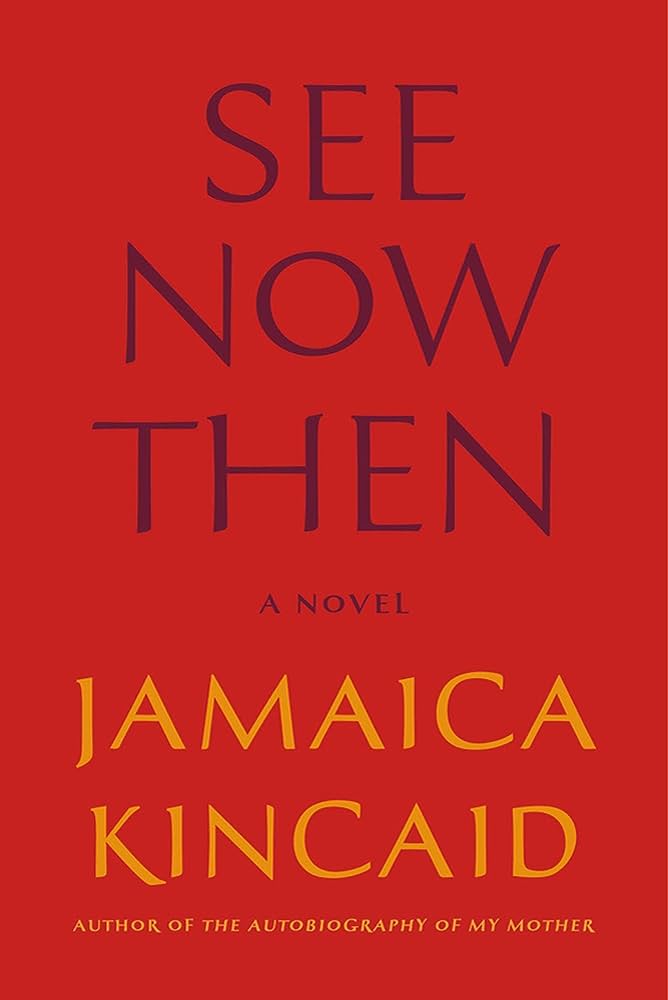
After reading several of Kincaid’s short stories so many years ago, I was very interested to see what this full, albeit short, novel would be like. I cannot say that I was disappointed, as her style, which in many ways overcomes and triumphs over the story itself, was transplanted onto this longer format and took the same form as one of her short stories. The result, upon this initial reading, is a sense of the narrative mimicking the human thought process and its winding, cumbersome, unorganized nature. Once I came to accept that the prose would be just as lengthy and rambling as her shorts, reading See Then Now became much easier and more enjoyable. This was an incredible book and I am happy to have had read it.
Killing Commendatore – Haruki Murakami
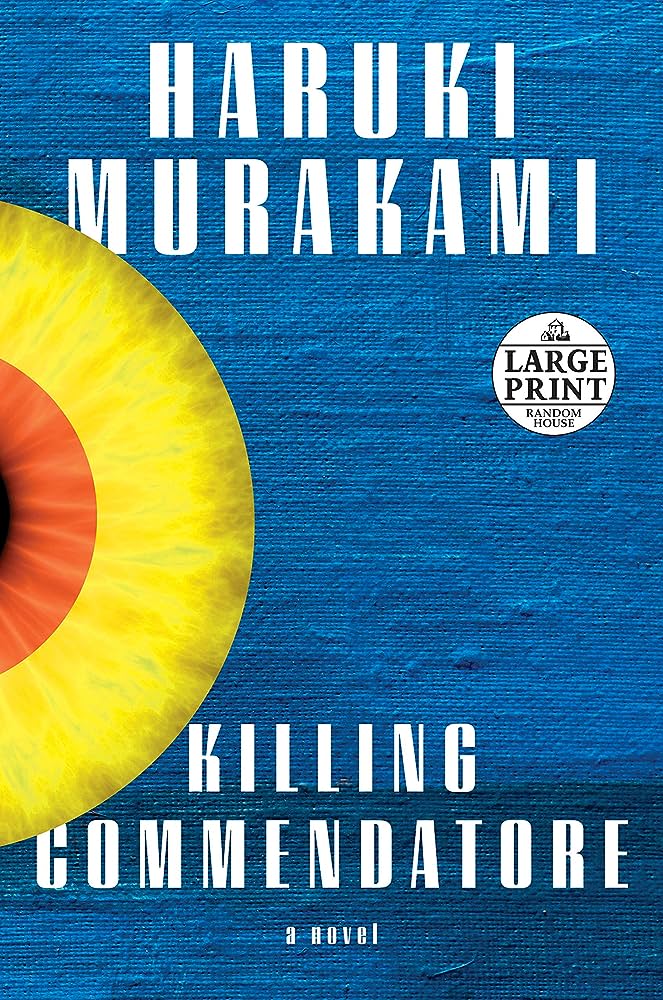
It wasn’t until I got to the last 40-50 pages of this book that I realized how complex it was. There are still so many questions unanswered; what’s the deal with Mariye’s adoptive father and the religious cult stuff? Who was the man with the white Subaru? Why did killing the Commendatore help Mariye escape Menshiki’s house? I feel like this book demands multiple reads as, even though it is considerably shorter than 1Q84, I feel like it has much more going on. It also was very similar to 1Q84, with the mystical dream-impregnation being a particular standout. I also noticed that, in the ones I’ve read so far, Murakami tends to end his books in a way that makes it feel as though everything is at peace. In Killing Commendatore, this feeling comes about by the destruction of certain symbols like the Akikawa home (along with the two pivotal, mystically charged paintings in the attic) and by the way that things reverted to the status quo, with the protagonist (unnamed?!?!) getting back together with his wife and it being hinted that Menshiki will become some sort of surrogate father for Mariye.
How to be Good – Nick Hornby

The New York Times review of this book called it “emotionally generous,” which I think is quite a good way to describe the story. At any rate, this was very fun to read and I tore through it pretty quickly. It was just about as funny as High Fidelity, although I don’t think I can say that I like it the same amount (that might be nostalgia talking, though). The ending was a bit unsatisfying, what with Katie basically retreating into her own private space, but it wasn’t altogether bad, either. I found that I flip-flopped from siding with Katie, then finding her a bit distasteful given her reaction to David’s charitable behavior, to then getting back on her side once David and GoodNews grew insufferable and unrealistic in their endeavors.
The Notebooks of Don Rigoberto – Mario Vargas Llosa

This was quite an interesting book, and my feelings about it are hard to put into words. I liked it, a lot, and the oddities of Llosa’s prose were definitely interesting to follow. The writing had a very manic, almost schitzophrenic energy to it, which was engaging to say the least. Of course, Don Rigoberto was a bit of a gross character, but that is what made him so appealing at the same time. I knew that I probably wasn’t going to get closure with regards to the whole Fonchito situation, so I wasn’t too bothered or disappointed by that. Perhaps the biggest takeaway for me is just the sense of eroticism, which I feel I understand more now; eroticism is more than just sexiness or lewdness, it has elements of mystery, discomfort, even terror, and is overall much more all-encompassing than anything else that pertains to the perfunctory acts of sex.
The Cider House Rules – John Irving

I’m so glad that I stuck with this book after feeling bored with its slower middle. The last 200 pages of this book were so much more tense, interesting, profound and entertaining than I expected, and the overall journey of Homer Wells and the rest of the characters was gratifying and moving. Like with The World According to Garp, I feel like this novel wore its themes on its sleeve, although there is still a lot that I’m sure I’m missing. There’s definitely plenty of commentary on duty, the rules of social and familial interaction, love, honesty, etc. (especially with Homer Wells essentially committing his life to a practice that goes directly against what he believes in– just to keep others safe). There was also, like Garp, a good amount of harmony and balance with certain events in the story. The trading of secrets, with Homer coming clean to Angel being immediately (in-text) followed by his impersonation of Fuzzy Stone to the board, is one example that comes to mind. This one definitely demands a re-read.
My Year of Rest and Relaxation – Ottessa Moshfegh
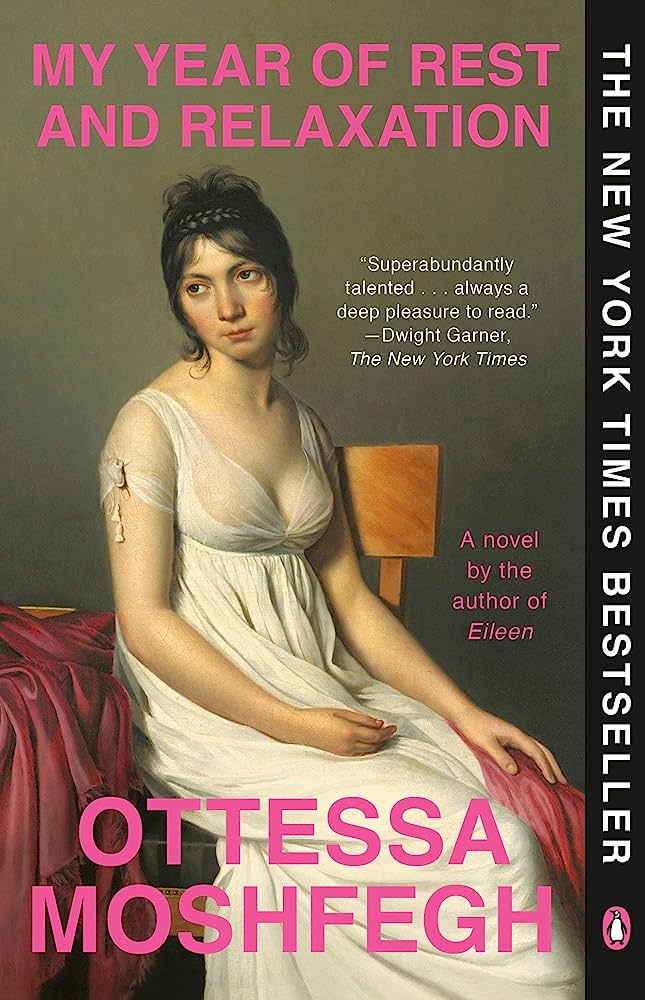
This is a book that Mom would definitely have a lot of distaste for owing to how “hateful” the protagonist is. I have to admit, I found her quite insufferable myself at many points. I struggled with the book in these moments, as it was hard to tell if the book was aware of how horrible she was. In the end, I think that she was intended to be very unlikeable– a common symptom of depression. The ending of the book, while somewhat rushed, was surprisingly powerful and satisfying.
Encyclopedia of Natural Magic – John Michael Greer
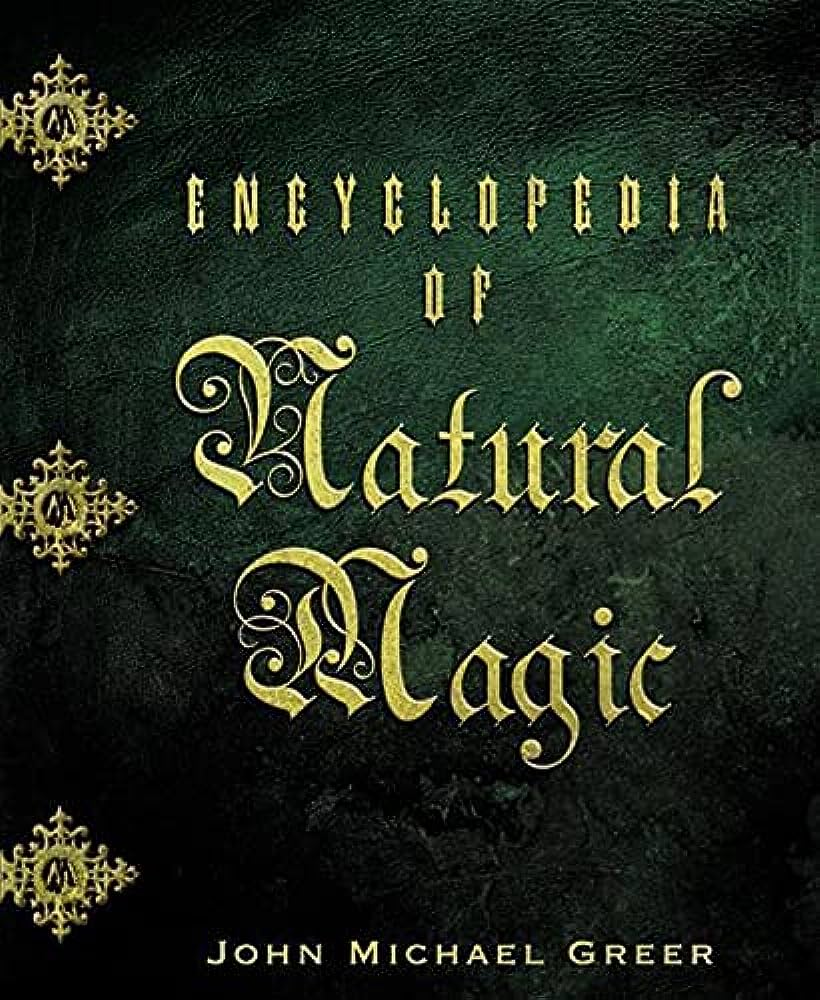
Kind of hard to write my thoughts about it one as it was pretty cut and dry for the most part. That said, it was very interesting, informative (even without accounting for the elements that may attract more skepticism), and well written. I stuffed an exceptional amount of Post-Its into this book, we will have to see if I even end up cracking it open again.
The Coup – John Updike

Written with the unmistakable enthusiasm, exuberance, and cutting meanness of a confident and young writer, The Coup was intensely engaging and interesting. The journey of Ellellou, from a radical, reactive college student in the states to the leader of a failing country to a beggar and then finally a family man, was thoroughly entertaining and unique. The book was endlessly critical as well, making great observations and comments about both 20th-century capitalism and grassroots Marxist movements, as well as aggressive, spiritual-centric leadership (this criticism did border on cynical at times, though). Updike’s prose, while difficult to get through at first, was definitely the highlight of the experience, as his verbose, lyrical style was wholly unique and exciting. I am looking forward to reading more of his work, and am interested to see how this one compares.
The Name of the Wind – Patrick Rothfuss

I’ve been trying to fill the gap left behind by A Song of Ice and Fire by exploring some other popular fantasy stories. After finishing The Name of the Wind, I can confidently say that I have yet to fill that void. Still, I liked this book a lot more than Elantris, mainly because it was just slightly more mature and considerably better written. That said, there was plenty that pissed me off, mainly the same wish fulfillment stuff jammed down my throat as in Elantris; Kvothe is a cool character, I guess, but holy shit, why does every single other character have to exist just to suck his dick? Literally every female character (all described as beautiful, lovely, etc.) flirts with him constantly, showing absolutely no interest in any other romantic partners; Kvothe’s friends, similarly, are only there to compliment him and be his cheerleaders, which sucks because a lot of the world building is very strong and I would have loved to see Rothfuss flesh out some of the other nationalities and the characters therein. Also, if any character disagrees with Kvothe, they are portrayed as sniveling, pathetic, unlikeable little twerps, which makes the moments of Kvothe putting them in their place satisfying but not believable or interesting. I’m willing to be a bit more lenient because 1) Kvothe is just more interesting than characters like Raoden and Sarene and 2) because this story is meant to be told in his own voice, so it makes sense that it would be centered on him (although that raises another issue of Kvothe perhaps being overly arrogant without the book recognizing this as an annoying trait). I have more negative comments than good ones, but I will say that I still liked the book a lot, and the moment-to-moment reading experience makes me excited for the next one, especially because of Rothfuss’s talent as a writer.
The Remains of the Day – Kazuo Ishiguro

For such a short novel, this packed an incredible amount of soul, passion, and emotion, while showcasing the author’s obvious talent. I confess to having teared up at certain points in the story, with one prominent example being the death of Stevens’s father, and how difficult it was for him to react in a way that most would consider normal or appropriate. The book also managed to be incredibly complex and sophisticated for its length, able to comment on not just the protagonist’s mental state and disposition, but the state of mid-20th-century British social affairs, deftly and subtlely interweaving the subjects in a way that was not entirely apparent at first. Indeed, like the bursts of understated emotion, these observations snuck up on me at many points during my time with the story. On top of these aspects, I have to praise the prose itself, as it was abundantly clever, insightful, pleasant, stimulating, exciting, and hilarious. All in all, one of the best books I have read this year.
Wuthering Heights – Charlotte Bronte

It’s hard to describe how much I loved this book. It’s also difficult to talk about a book that has so much history and prestige behind it, but I will try. Wuthering Heights was considerably more entertaining, exciting, funny, clever, and moving than I expected it to be. I think that there is a very misguided stigma against these old, English novels that makes a lot of people consider them boring or drab, but I felt way more engaged while reading this compared to my experience reading a contemporary novel like Agatha of Little Neon. Not really a fair comparison, I know, but still. Aside from being fun to read, the prose was excellent, gripping, thoughtful, and unique, and I could feel the poetry behind every sentence. The characters were fantastic as well, with Heathcliff being perhaps one of the greatest literary villains I have ever come into contact with. The only criticisms I have, if they can even be called that, is that the switching of perspectives was a bit confusing at first, and a lot of the more antiquated elements of spelling and grammar could throw me off a bit at times.
Wise Blood – Flannery O’Connor
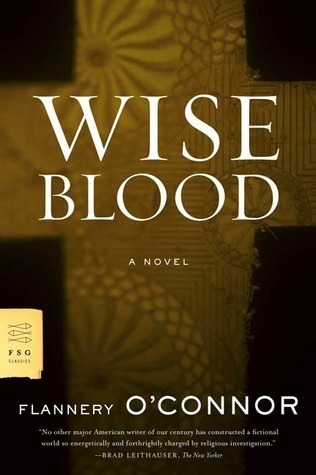
Pretty good but I can’t say I am particularly passionate about it. The standout of the book was, unsurprisingly, O’Connor’s vibrant and arresting prose, which is just as strong here as in the short stories of hers that I have read. Her work is a good example of how writing can make a situation or location feel more real than the actual experience of it yourself, and I think that that is on full display here. The book was definitely clever and funny as well, with the obvious parallels between Haze and traditional, Christian preachers being particularly amusing. The fact that every character was out to get something from other people via exploitation, manipulation, or just plain annoyance was also interesting, and it could tie into the themes of organized religion and fanaticism. My literary analysis starts and ends there, though, as I feel like I didn’t really get the book all that much. There were many moments, such as the stuff with the gorilla, the three-foot-tall man, and the cop who pushes Haze’s car over the embankment, that I didn’t really understand and felt like I should have. Still, the book was compelling, interesting, entertaining, and thought-provoking enough to be worth the read, and I’ll probably dive into it again at some point.
Chronicles of a Death Foretold -Gabriel Garcia Marquez

Not bad at all and very interesting. This is another book that I don’t have that much to say about, primarily because it was so short and straightforward, but the twisted politics of small-town South America were interesting to observe, and Marquez’s energetic, efficient prose was a pleasure to read as always.
The Enchantress of Florence – Salman Rushdie
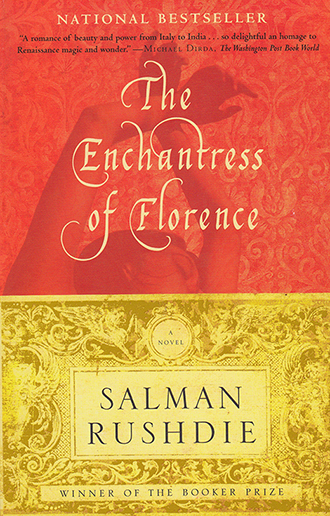
This was so damn interesting. The blend of real history with magic, sexual intrigue, and thoughtful personalization was really unique and not quite like anything I have ever read before. The relationships between the characters, especially Vespucci and Akbar, were believable, meaty, and surprising. Speaking of surprises, the way the twists of the story were delivered, especially at the end with their rapid-fire pace, was exciting and satisfying. A great read and a good start to my exploration of Rushie.
The Bachelor of the Arts – R.K. Narayan
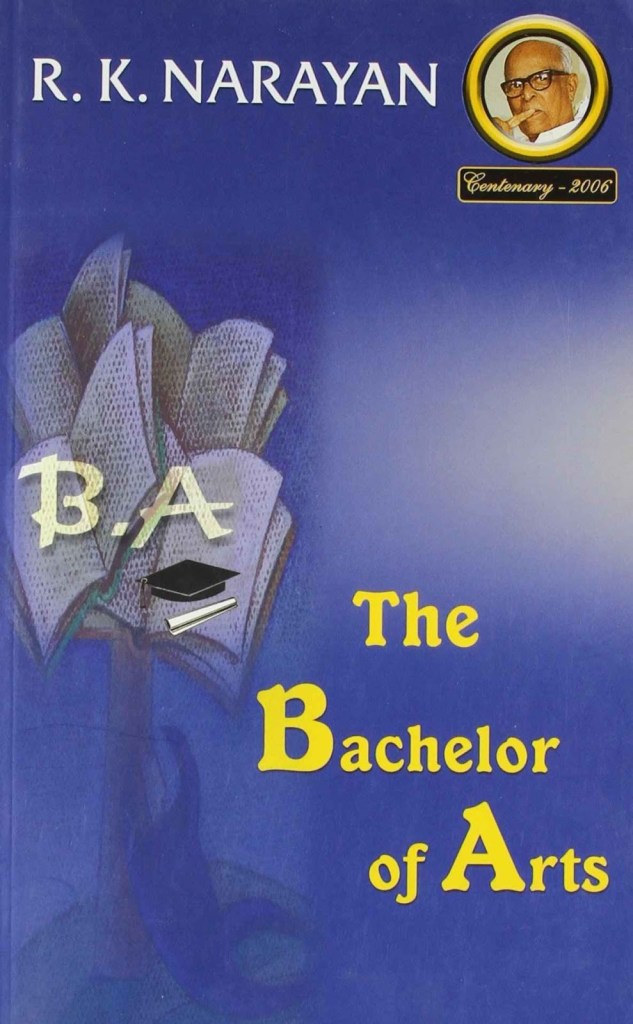
Surprisingly really good and contemporary. Like many others, I had not heard much about Narayan before embarking on this read, but now I am extremely excited to dig into his work. Although the setting and cultural backdrop are extremely far removed from my own, I found it very easy to relate to Chandran, who was experiencing a coming-of-age that was just as turbulent and confusing as any experienced by those in the west. His identity was in a state of flux throughout the story, and I felt like much of the narrative was focused on him trying out different personalities and values before realizing that it wasn’t “him” and moving on. The book ending abruptly was very fitting, as it sort of recreated the feeling of setting out into the world, unsure of what is coming next.
A Moveable Feast – Ernest Hemingway
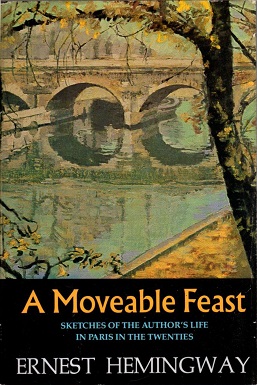
Might be my favorite Hemingway book. It’s strange, because this is the only piece of non-fiction that I’ve read from him, but it had a very similar feel to many of his works of fiction (something that he points out himself in the foreword of the book). That said, there is a vulnerability and sensitivity present in the work that I haven’t quite picked up on in any of his previous books. The biting criticism and judgment is still there, but it’s subdued and the whole thing is very introspective– something that is kind of bizarre given his legacy as a guarded, “macho” person. The regular name drops were also really interesting and fun, but the pulling back of the curtain, showing his process as a writer, was the most illuminating and valuable part of the experience for me. I wish that he could have written more memoirs like this.
Dance, Dance, Dance – Haruki Murakami
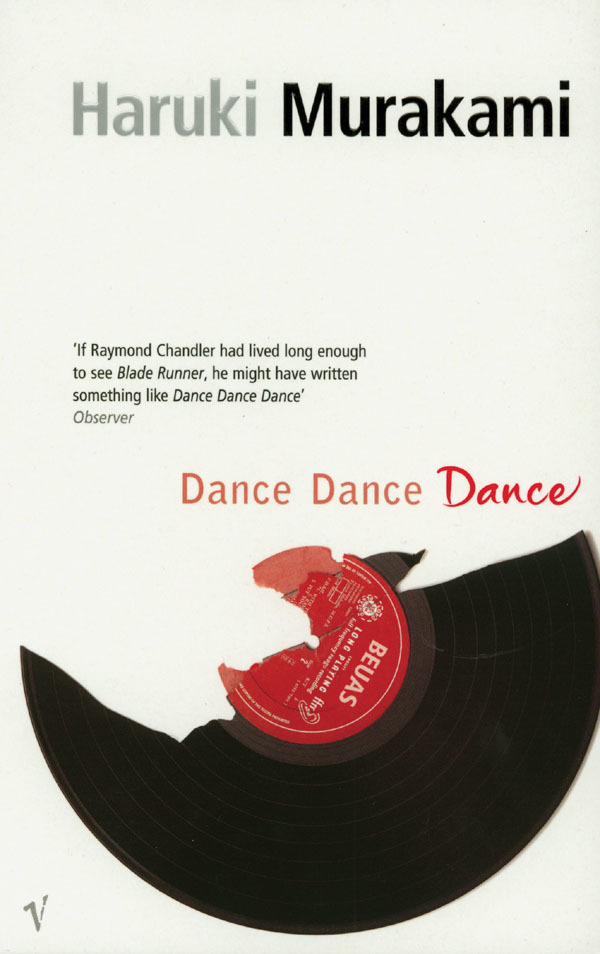
Really great but I think I need some time away from Murakami (although I said the same thing after 1Q84). The Murakami formula really started to become apparent to me with this book, and it’s clear that he will often write about characters, unexplained phenomena, romance, and interpersonal relationships in a very similar way across many different books. This isn’t a bad thing necessarily, but it can get a little old. Having said that, I’m really interested to pursue the other entries in the Rat series, as I liked the fusion of mundane, slice-of-life storytelling with crime thriller and supernatural mystery. The cast of characters in Dance, Dance, Dance was fantastic as well, and I quickly became endeared to each new character introduced to the story, with Dick North, Yuki, and Gotama being a few favorites. This is something that Murakami seems to excel at, even if his protagonists (with exceptions) can be a little bland.
Dark Places – Gillian Flynn
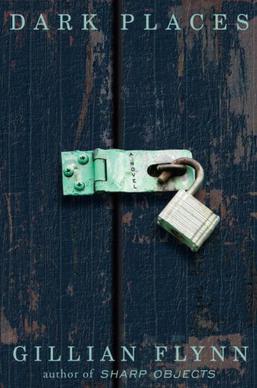
Good lord this story made me sick with anxiety. Even though it’s a well-established formula, the way that Flynn jumps from the investigation in present-day back to the day of the murders was brilliant, as the Ben and Patty chapters were so full of foreboding and dread, which was only briefly relieved by the Libby chapters. This did wonders for the pacing of the book, even though the Libby chapters were undeniably less interesting and tense. Compared to her other novels, this one felt a lot more heartbreaking, as the situation with Ben is so clearly unfair and born of chaos. Yes, he could have made better decisions and he isn’t perfect, but he was just fifteen when shit hit the fan, and his actions are understandable. Sidenote: Diondra and Trey are some of the most disgusting, despicable characters I’ve encountered in literature in recent memory. Holy shit, they were terrible, infuriating people, and reading about them was an absolute blast. This book is definitely better than Sharp Objects, though maybe not quite as good as Gone Girl, which is not at all a bad place to be. I am eagerly awaiting Flynn’s fourth novel, as her work has such an intense, inevitable, and moving quality to it, and I become more and more convinced that she is the definitive thriller/crime writer of this generation.
Pylon – William Faulkner

Well. I don’t know how Faulker did it, but I somehow wound up really liking this book at the tail end. The reason this surprises me is because the majority of the book was so painfully boring that I seriously considered just giving up and moving on to The Three-Body Problem. Christ, why was there such a focus on the technical aspects of aeronautics? It was mind-numbing and I honestly felt like I may have missed important details because my eyes were basically glazed over at points. That said, everything wound up being wrapped together in a satisfying and surprisingly moving way. The weird entanglement of Laverne, Shumann, and the jumper, alongside Jiggs and the reporter, turned out to actually mean something after being seemingly in the background of the story for such a long period. I just finished the book at the time of writing so I may feel differently, but damn, Laverne is one cruel individual. There’s no doubt in my mind that Faulkner is a genius, his prose and the construction of the story proves that, but I hope that the next thing I read from him is a bit more engaging. I’m only human after all, and I can’t spend hours looking at characters talk about shit like altimeters and fuselages without getting bored.
The Three Body Problem – Cixin Liu
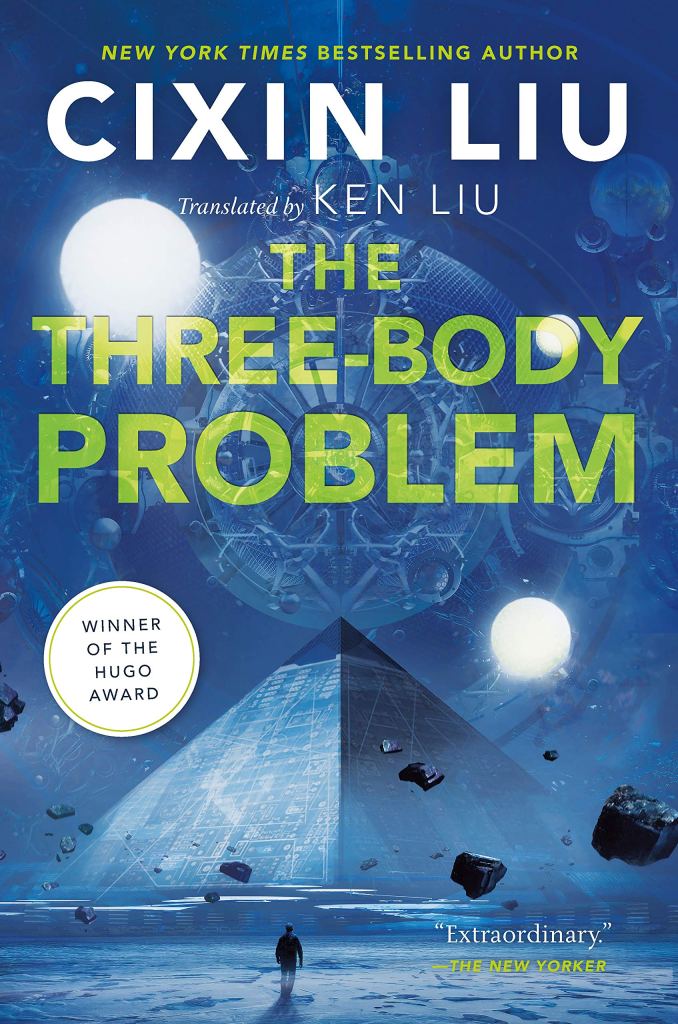
Easily one of the best science fiction books I’ve ever read. The way that the story unfolds, with everything completely unclear and confusing at first, eventually coming into focus over the course of the story, was incredibly effective and satisfying. I particularly admire the inclusion of the Three Body game, as it forces the reader, through Xiao Wang, to want to find a solution for this fictional civilization, only to eventually find out that the solution means the effective end of the human race. The technical elements, while difficult to fully understand at points, was also welcomed as, unlike Pylon, this book makes the significance of these elements incredibly clear in each instance, and the implementation of theoretical physics was consistently interesting, even for someone lacking a background in science. At the time of writing, I’m already almost done with The Dark Forest, the second book in the series, so it’s hard to organize my throughts to be exclusive to this first entry, but I think I like it a tiny bit more than The Dark Forest. I’ll have to make that ultimate judgement later, though.
The Dark Forest – Cixin Liu
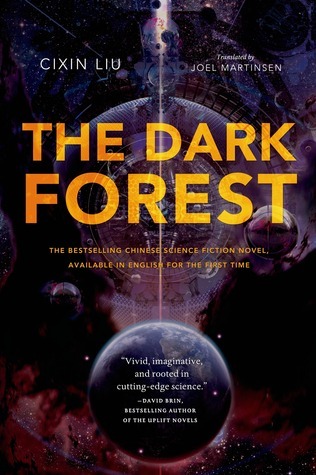
Turns out this book was actually way better than the first one. The first book definitely stands on its own, don’t get me wrong, but The Dark Forest was considerably more ambitious, thought-provoking, and emotionally resonant. Looking back on my entry for The Three Body Problem, I expressed my feeling with little eloquence or conciseness, and I think a lot of that comes down to me being distracted with The Dark Forest. The seeds that Three Body plants blossom into complex, flowering narratives in The Dark Forest, and it’s wonderful to trace the events that happen in this sequel back to the events of its predecessor. The removal of Xiao Wang from the narrative was jarring at first, but it’s certainly thematically appropriate, as he was ultimately nothing more than a incomprehensibly small part of a larger whole. Despite how bleak this book could be at times, it felt far from cynical, and the ending left me with tears in my eyes; I can’t believe that, after hundreds of pages of despair and terror, this book concluded with a happy ending touching on the power of love and perseverance. And Luo Ji got to be a hero in the end! It was honestly incredibly emotional and satisfying, and I’m glad it ended how it did. This didn’t exactly end on a cliffhanger, but I’m still very committed to finishing this series, as Liu has proven himself to be an astoundingly talented writer of not just science-fiction, but also of the turmoil of the human heart.
Death’s End – Cixin Liu

Probably my least favorite of the three but make no mistake, Death’s End is still incredible and a worthy conclusion to the Three Body saga. I devoured these books back-to-back because they provided me with just about everything I want from sci-fi stories, and then some. The science elements were thorough and thought-provoking, and Liu clearly takes this aspect of the story very seriously, but there is also so much heart present in the trilogy, and I won’t be shy about the fact that I cried at the end of this book and Dark Forest. This book is probably my least favorite due to how disjointed it feels, but that never stops it from being enjoyable and emotional throughout. On that last point, Death’s End took me through the highest highs and lowest lows of emotion, as it becomes clear that there is nothing that humanity can do to stop the various threats of the universe. There are moments of optimism, like when Gravity and Blue Space successfully thwart the Trisolaran invasion by invoking Dark Forest deterrence, which are almost immediately yanked away thanks to the introduction of some new complication or disaster. I felt emotionally drained by the end of the book, after watching the solar system, OUR solar system, get annihilated, and not even by the enemy that humanity had been fighting against for the majority of the series. However, seeing that humankind, along with Trisolaris, was remembered, even after millions of years, offered just enough joy to keep me from quitting the book entirely due to its melancholic, cosmic, existential twists and turns. The Three Body Problem trilogy makes me feel infinitesimally small and in the end, it doesn’t offer hope to its readers, but peace, which I think is even better.
I’m Glad my Mom Died – Jeanette McCurdy

Not bad. McCurdy is surprisingly hilarious and empathetic in this debut, and I think that, while everyone knows that child stardom is bad, she managed to provide an interesting perspective on it. I really appreciated how vulnerable she was with this bio, as these types of books have historically served as vanity projects for celebrities to recount their lives in the most romantic, masturbatory ways. I also greatly appreciated her final words regarding her mother, as I was kind of expecting her to just slam her as a monster. Instead, she took a fair and decent approach to describing the woman, viewing her as a person with strengths and flaws. I have absolutely no clue what’s next for McCurdy, but it could be interesting– I hope she does more writing.
I’m Thinking of Ending Things – Ian Reid
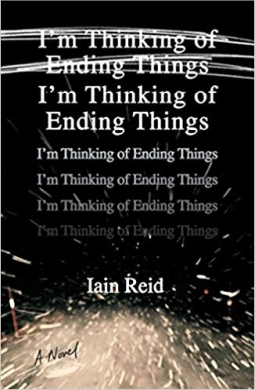
Definitely weird to read this after watching the movie so many times, but I still felt like I got at least something out of it. It definitely makes sense that Kaufmann would pick something like this to adapt, but I actually think that the movie does a slightly better job of conveying the oppressive feeling of depression and loneliness than the book. In the book, Jake is a considerably more likeable character, which might make him easier to put up with, but it also detracts from the feeling that he is an outcast. Still, a good, short, fun read.
No Longer Human – Osamu Dazai

This was pretty good at most points, although I was slightly underwhelmed. I can’t really fault the book for this, though, as I definitely went into it with the wrong mindset, expecting something dark and shocking, maybe a little sensational, almost. What I got was a more old-fashioned, thoughtful, subtle novel that never blew my mind at any one particular moment, but quietly wormed its way into the recesses of my mind and set up shop, building a character with a methodology and psychology that I could relate to in many ways. No Longer Human is heartbreaking, not in the same way as something like The Cider House Rules, but through the tragedy of its main character, who is unable to get in touch with himself and see his full potential as a loving, kind, gentle human being, resigning himself to a position as a depressed, not-understandable misfit with no shot at love or friendship. I was surprised by this book, unpleasantly at first, but now I’m looking forward to reading more from Dazai.
Ender’s Game – Orson Scott Card
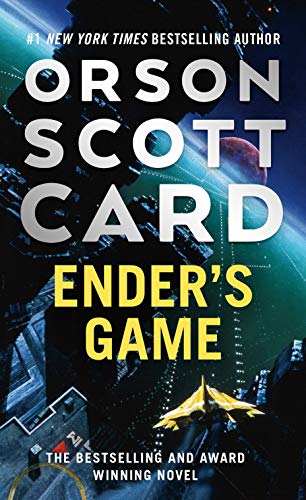
A very fun read that was much more mature and complex than I would have first assumed. I was kind of picturing “Harry Potter in space,” but the way this book managed to incorporate human psychology, politics, and clever sci-fi worldbuilding made it very fun to read. Don’t get me wrong, it’s no Three Body Problem, but it was a fun ride with a smart twist and some cool ideas.
The Buried Giant – Kazuo Ishiguro

Really great but not as good as What Remains of the Day. I found myself losing focus at certain points in the story, which may just be because it was a slow burn, but so was What Remains of the Day and I loved that. Like with a lot of slow burn books, I felt that the story really picked up for me as it approached its finale, as all the mystery finally came together in a very satisfying fashion. The end was quite emotional as well.
Middlesex – Jeffrey Eugenides
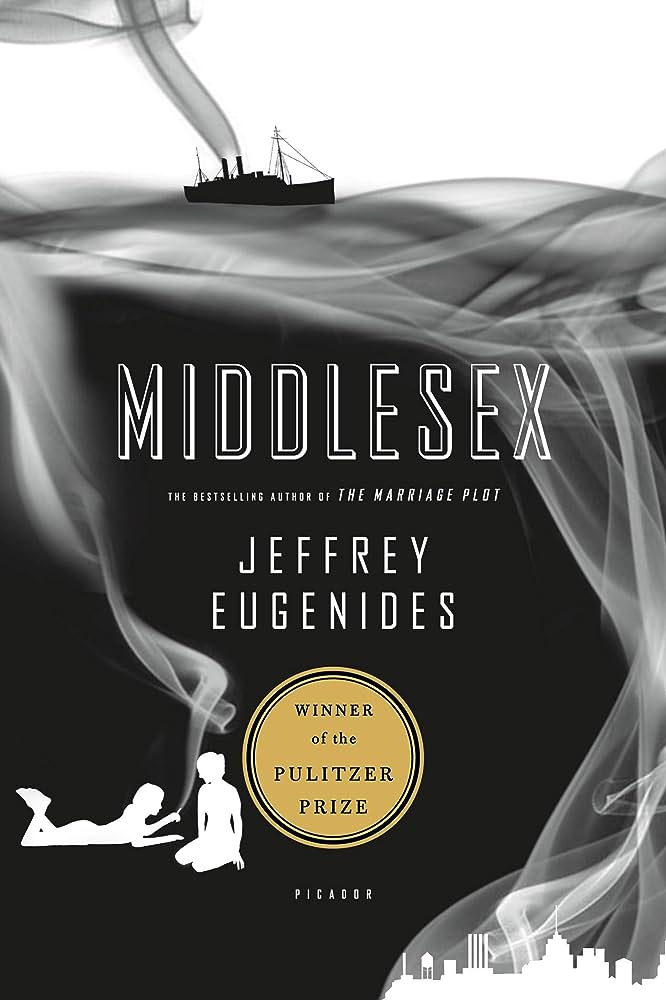
Pretty fantastic. I got a lot of A Little Life vibes from this one, not sure why. Anyway, it’s been a while since I read this– I’ve been neglecting the spreadsheet again– but the bottom line is that I loved this book. It was a little boring at times and the chase scene at the end was pretty silly and a weird tonal shift, but it was great for the most part. Middlesex is an enrapturing and enthralling exploration of gender and personal identity, and one that I think everyone with a passing interest in those subjects should read.
Slaughterhouse-Five – Kurt Vonnegut
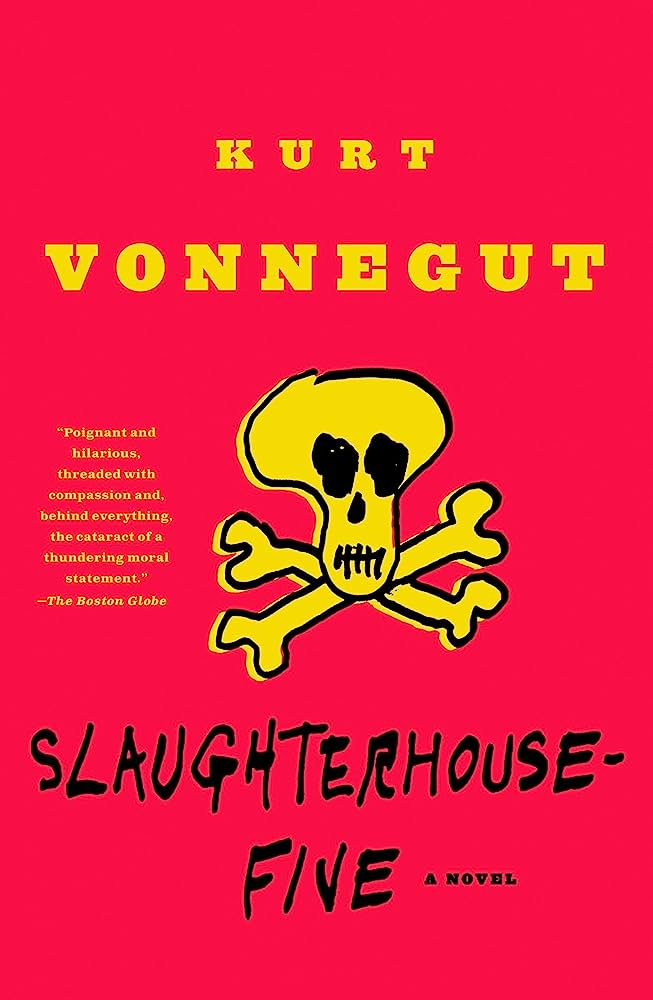
I feel like I’m breaking some sort of reader code when I say this, but I thought this book was low-key boring as hell. I’m not quite sure what it is, because I definitely didn’t feel that way with Cat’s Cradle or The Sirens of Titan. I think that my issue (if you can call it that) with Vonnegut has to do with the fact that his stories feel more like a series of jokes or observations, maybe explorations of a certain concept, than a traditional story. There was not much in Slaughterhouse that made me feel like I had to know what was going to happen next, nothing that compelled me to turn the page, nothing that evoked any strong emotions in me. It sucks, because I think a lot of what Vonnegut was going for here is good and I do respect this book, I just didn’t connect with it.
 Nick Rodriguez